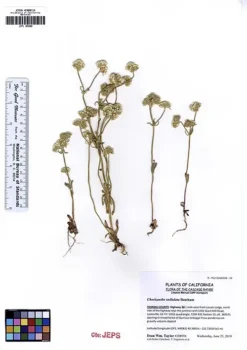
Starlet Spineflower: A Delicate California Native Worth Discovering
Meet the starlet spineflower (Chorizanthe stellulata), a charming little California native that might just steal your heart—if you can find it! This delicate annual wildflower brings subtle beauty and ecological value to native plant gardens, though its somewhat uncertain conservation status makes it a special find worth protecting.
What Makes Starlet Spineflower Special?
Don’t let the name spineflower fool you—this isn’t a prickly customer! The starlet spineflower is actually a gentle, low-growing forb that produces clusters of tiny, star-shaped flowers in white to soft pink. These delicate blooms appear along slender stems, creating an airy, almost ethereal effect in the garden. As an annual plant, it completes its entire life cycle in one growing season, making it a perfect addition to naturalistic plantings that change with the seasons.
Where Does It Call Home?
This California native is endemic to the Golden State, where it originally thrived in coastal areas and inland valleys. You’ll find it naturally occurring in sandy soils, grasslands, and open areas where it can soak up plenty of California sunshine.
- Species observed
- No observations
A Word of Caution: Rarity Matters
Here’s where things get important: starlet spineflower has an uncertain conservation status (listed as S3?), which suggests it may be vulnerable in some areas. If you’re lucky enough to find seeds or plants available, make sure you’re sourcing them responsibly from reputable native plant nurseries or seed suppliers who ethically collect from abundant populations. Never collect from wild populations!
Why Consider Starlet Spineflower for Your Garden?
Despite its delicate appearance, this little native packs some serious benefits:
- Pollinator magnet: Small native bees, beneficial insects, and butterflies love its tiny flowers
- Drought champion: Once established, it thrives with minimal water—perfect for water-wise gardens
- Low maintenance: As a true native, it doesn’t need fertilizers or fussy care
- Authentic California character: Adds genuine local flavor to native plant gardens
- Seasonal interest: Provides spring and early summer color before naturally completing its cycle
Perfect Garden Matches
Starlet spineflower shines in several garden styles:
- Native plant gardens and California-themed landscapes
- Wildflower meadows and naturalistic plantings
- Rock gardens and xeriscapes
- Slope plantings for gentle erosion control
- Pollinator gardens focused on native species
Growing Starlet Spineflower Successfully
Climate Needs: Thrives in USDA zones 8-10, making it perfect for California’s Mediterranean climate and similar regions.
Site Selection: Choose a spot with full sun and excellent drainage. Sandy or rocky soils are ideal—this plant definitely doesn’t like wet feet!
Planting Tips:
- Direct sow seeds in fall for natural winter stratification
- Lightly rake seeds into the soil surface
- Water gently until germination occurs
- Space plants naturally—they’ll find their own comfortable arrangement
Care and Maintenance:
- Water sparingly once established—think California dry not garden moist
- Skip the fertilizer—natives prefer lean soils
- Allow plants to complete their natural cycle and drop seeds for next year
- Enjoy the show, then let nature take its course
The Bottom Line
Starlet spineflower offers a wonderful opportunity to grow a true California native that supports local wildlife while adding delicate charm to your garden. While its potential rarity means you’ll need to source it thoughtfully, the effort is worthwhile for gardeners passionate about authentic native plantings. Just remember: this little star performer prefers the set it and forget it approach—sometimes the best thing we can do for native plants is simply give them the right conditions and get out of their way!
If you can’t locate starlet spineflower from responsible sources, consider other California native annuals like clarkia, baby blue eyes, or California poppies to achieve similar seasonal color and pollinator benefits in your native garden.