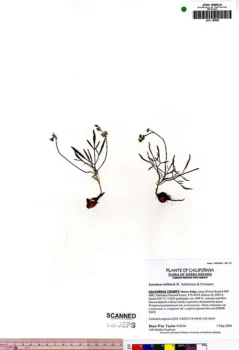
Stebbins’ Desertparsley: A Rare California Native Worth Preserving
Meet Stebbins’ desertparsley (Lomatium stebbinsii), a delicate and increasingly rare California native that’s capturing the attention of conservation-minded gardeners. This charming perennial belongs to the carrot family and offers a unique opportunity to support local biodiversity while adding subtle beauty to your native plant collection.
What Makes Stebbins’ Desertparsley Special?
This lovely forb produces clusters of tiny white to cream-colored flowers arranged in umbrella-like formations called umbels. The delicate, fern-like foliage creates an airy texture that pairs beautifully with other California natives. As a perennial, it returns year after year, slowly establishing itself as a reliable presence in the right garden setting.
Where Does It Call Home?
Stebbins’ desertparsley is exclusively native to California, making it a true Golden State endemic. You’ll find it naturally occurring in limited locations throughout the Central Valley and surrounding foothills, where it has adapted to the region’s Mediterranean climate and seasonal rainfall patterns.
- Species observed
- No observations
Important Conservation Note
Before we dive into growing tips, there’s something crucial you need to know: Stebbins’ desertparsley carries a Global Conservation Status of S2, meaning it’s considered imperiled. With only 6 to 20 known occurrences and an estimated 1,000 to 3,000 individual plants remaining in the wild, this species is extremely vulnerable to extinction.
If you’re interested in growing this rare beauty, please ensure you source it only from reputable native plant nurseries that propagate from ethically collected seeds or cuttings. Never collect from wild populations!
Is This Plant Right for Your Garden?
Stebbins’ desertparsley is perfect for gardeners who:
- Want to support conservation efforts for rare California natives
- Are creating specialized native plant collections
- Have experience with challenging or uncommon natives
- Appreciate subtle, delicate beauty over flashy displays
- Live in USDA zones 8-10 with Mediterranean climate conditions
Creating the Perfect Growing Conditions
Success with Stebbins’ desertparsley requires mimicking its natural habitat:
- Drainage is everything: This plant absolutely must have excellent drainage. Heavy or waterlogged soils will quickly kill it
- Full sun exposure: Provide at least 6-8 hours of direct sunlight daily
- Minimal water needs: Once established, it’s quite drought tolerant and prefers dry conditions during summer
- Soil type: Well-draining, sandy or rocky soils work best
- Climate considerations: Thrives in areas with wet winters and dry summers
Planting and Care Tips
Growing this rare native requires patience and attention to detail:
- Plant in fall or early winter to align with natural rainfall patterns
- Provide supplemental water during the first year only during dry spells
- Avoid fertilizing – these plants prefer lean soils
- Mulch lightly with gravel or decomposed granite rather than organic mulch
- Allow the plant to go dormant during hot, dry summers
Supporting Pollinators and Wildlife
The small flowers of Stebbins’ desertparsley attract various beneficial insects, including native bees and other pollinators. While it may not be the showiest plant in your garden, it plays an important role in supporting local ecosystem health and providing nectar sources for specialized pollinators.
Garden Design Ideas
This subtle beauty works wonderfully in:
- Native plant restoration projects
- Rock gardens with excellent drainage
- Collections focused on rare or endangered species
- Mediterranean-style landscapes
- Educational or demonstration gardens
The Bottom Line
Stebbins’ desertparsley isn’t for every gardener, but for those committed to conservation and native plant preservation, it offers a meaningful way to participate in protecting California’s botanical heritage. Its rarity makes it a special addition to any serious native plant collection, and its delicate beauty rewards those who take the time to appreciate subtlety in the garden.
Remember: only source this plant from reputable nurseries committed to ethical propagation practices. By growing responsibly sourced Stebbins’ desertparsley, you become part of the conservation effort helping to ensure this rare California native survives for future generations to enjoy.