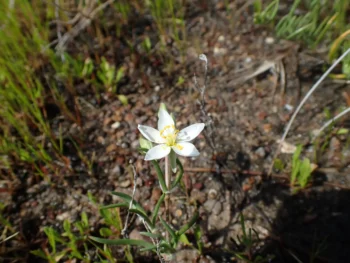
Sticky Sandspurry: A Charming California Native for Challenging Garden Spots
Meet sticky sandspurry (Spergularia macrotheca var. longistyla), a delightfully resilient California native that’s perfectly content in places where other plants throw in the towel. This unassuming little perennial might not win any flashy flower contests, but it’s got character and staying power that make it a valuable addition to the right garden.
What Makes Sticky Sandspurry Special
Don’t let the humble appearance fool you – sticky sandspurry is a botanical survivor. This low-growing forb (that’s garden-speak for a non-woody flowering plant) forms attractive mats of succulent-like foliage topped with dainty white to pink flowers. It’s like nature’s answer to those impossible garden spots where salt spray, poor soil, and drought team up to challenge even the most determined gardener.
As a California native found primarily along the coast, this plant has evolved to handle conditions that would stress out your average garden center perennial. Its sticky stems and leaves (hence the name!) help it thrive in salty, alkaline soils where many other plants simply can’t establish themselves.
Where Sticky Sandspurry Calls Home
This specialized native is found exclusively in California, where it naturally occurs in coastal salt marshes and alkaline areas. It’s perfectly adapted to the unique conditions of the Golden State’s coastline, making it an authentic choice for California native plant gardens.
- Species observed
- No observations
Important Note About Rarity
Before you rush out to find sticky sandspurry for your garden, here’s something crucial to know: this variety has a conservation status that indicates it’s moderately rare. If you’re interested in growing this plant, please ensure you source it from reputable native plant nurseries that propagate their stock responsibly rather than collecting from wild populations.
Why You Might Want to Grow Sticky Sandspurry
This little native shines in specific situations where other plants struggle:
- Coastal gardens: Perfect for seaside locations where salt spray is a constant challenge
- Problem soils: Thrives in alkaline, sandy, or poor soils that frustrate other plants
- Low-maintenance areas: Once established, it needs minimal care and water
- Native plant gardens: Adds authentic local character to California native landscapes
- Pollinator support: Small flowers provide nectar for native bees and other tiny pollinators
Growing Conditions and Care
Sticky sandspurry is refreshingly straightforward to grow – if you can provide the right conditions:
- Sunlight: Full sun is essential for best growth and flowering
- Soil: Well-draining, alkaline to neutral soils; tolerates poor and sandy conditions
- Water: Drought-tolerant once established; avoid overwatering
- Climate: Best suited for USDA zones 8-10, particularly coastal California conditions
- Salt tolerance: Excellent – perfect for coastal exposures
Planting and Care Tips
The key to success with sticky sandspurry is remembering it’s adapted to harsh conditions, so don’t kill it with kindness:
- Plant in spring or fall when temperatures are moderate
- Ensure excellent drainage – this plant hates soggy roots
- Water regularly during the first growing season to establish roots
- Once established, water sparingly; it prefers dry conditions
- No fertilizer needed – it’s adapted to nutrient-poor soils
- Minimal pruning required; just remove spent flowers if desired
Is Sticky Sandspurry Right for Your Garden?
This native is perfect for gardeners who:
- Live in coastal California and want authentic native plants
- Have challenging growing conditions like salt spray or poor soil
- Appreciate subtle beauty over flashy displays
- Want low-maintenance, drought-tolerant ground cover
- Are committed to sourcing plants responsibly
However, sticky sandspurry might not be the best choice if you’re looking for showy flowers, need plants for heavy foot traffic areas, or garden outside of coastal California where it may not be well-adapted.
The Bottom Line
Sticky sandspurry proves that sometimes the most unassuming plants are the most valuable. For California coastal gardeners dealing with challenging conditions, this native offers an authentic, low-maintenance solution that supports local wildlife while adding quiet charm to the landscape. Just remember to source it responsibly to help protect wild populations of this special California native.