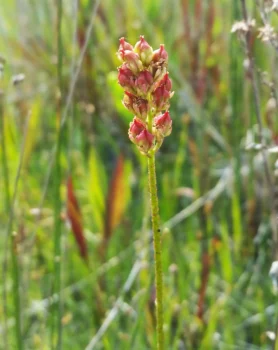
Sticky Tofieldia: A Specialized Native Wetland Beauty
If you’ve ever wandered through a bog or wetland and noticed delicate spikes of tiny white flowers rising from grass-like foliage, you may have encountered sticky tofieldia (Triantha glutinosa). This unassuming native perennial has a quirky claim to fame – it’s one of the few plants that can actually capture and digest small insects, though it’s primarily carnivorous toward tiny midges rather than the dramatic fly-catching we see in Venus flytraps.
What is Sticky Tofieldia?
Sticky tofieldia is a perennial forb – essentially a non-woody flowering plant that comes back year after year. Despite its humble appearance, this native wildflower has an impressive range, naturally occurring across much of North America from Alaska down to Georgia and west into the Great Plains. You might also know this plant by its former scientific names, including Tofieldia glutinosa, though botanists have recently moved it to the genus Triantha.
Where Does It Grow?
This adaptable native thrives across an enormous geographic range, including Alaska, most Canadian provinces, and numerous U.S. states from coast to coast. You’ll find it growing naturally in Alberta, British Columbia, Manitoba, New Brunswick, Nova Scotia, Ontario, Quebec, Saskatchewan, Yukon, Northwest Territories, Labrador, and Newfoundland. In the United States, its range includes Connecticut, Georgia, Illinois, Indiana, Maine, Maryland, Michigan, Minnesota, New Hampshire, New Jersey, New York, North Carolina, North Dakota, Ohio, Oregon, Tennessee, Vermont, Virginia, West Virginia, and Wisconsin.
- Species observed
- No observations
The Wetland Specialist
Here’s where sticky tofieldia gets particular about its living conditions. This plant is what botanists call an obligate wetland species in most regions, meaning it almost always occurs in wetlands. Only in Alaska does it have a more flexible facultative wetland status, sometimes venturing into drier areas. This wetland preference is both its greatest strength and its biggest challenge for home gardeners.
Should You Grow Sticky Tofieldia?
The honest answer? Probably not, unless you have very specific garden conditions. Here’s why:
The Challenges:
- Requires consistently wet or boggy soil conditions
- Needs acidic soil conditions that most gardens don’t naturally provide
- Can be difficult to establish and maintain outside its natural habitat
- Not readily available from most nurseries
- Relatively small and subtle aesthetic impact compared to showier wetland plants
The Benefits:
- Native plant supporting local ecosystems
- Attracts small pollinators like flies and tiny bees
- Thrives in challenging wet conditions where other plants struggle
- Interesting carnivorous adaptation (though subtle)
- Extremely hardy (zones 2-7)
Perfect Garden Situations
Sticky tofieldia shines in very specific landscape scenarios:
- Bog gardens: If you’ve created or inherited a bog garden, this could be a perfect addition
- Wetland restoration projects: Ideal for naturalized areas or ecological restoration
- Rain gardens: In consistently wet sections that stay boggy
- Pond margins: Natural-looking edges around water features
Growing Conditions
If you’re determined to try growing sticky tofieldia, here’s what it needs:
- Moisture: Consistently wet to boggy soil – think spongy, not just moist
- Soil: Acidic conditions preferred, often naturally occurring in peat-based soils
- Light: Full sun to partial shade
- Hardiness: Zones 2-7, extremely cold tolerant
- Height: Typically grows 4-12 inches tall
The Bottom Line
Sticky tofieldia is a fascinating native plant with unique adaptations, but it’s definitely a specialist. Unless you have naturally boggy conditions or are creating a wetland garden, you’ll probably find more success with other native wetland plants like blue flag iris, cardinal flower, or swamp milkweed. These alternatives offer similar ecological benefits with more forgiving growing requirements and greater visual impact.
However, if you’re working on a bog garden, wetland restoration, or have that perfect soggy spot that nothing else wants to colonize, sticky tofieldia could be exactly the quiet, specialized native you need. Just remember – this isn’t a plant you can simply plop into average garden soil and expect to thrive. It’s evolved for very specific conditions and will reward gardeners who can provide them with subtle beauty and ecological authenticity.