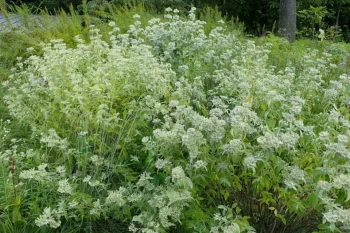
Stone Mountainmint: A Rare Native Gem Worth Growing Responsibly
Meet stone mountainmint (Pycnanthemum curvipes), a delightful native perennial that’s flying under the radar in most gardens—and for good reason. This southeastern treasure is actually quite rare, making it both a conservation priority and a special addition to the right garden.
What Makes Stone Mountainmint Special?
Stone mountainmint is a charming forb (that’s garden-speak for a non-woody flowering plant) that belongs to the mint family. True to its heritage, it offers wonderfully aromatic foliage that releases a pleasant minty fragrance when brushed against. The plant produces clusters of small white to pale pink flowers that create a cloud-like effect in late summer, making it a subtle but beautiful garden performer.
As a perennial, stone mountainmint returns year after year, slowly building into small colonies through underground rhizomes. Don’t worry—it’s not aggressive like some of its mint cousins!
Where Stone Mountainmint Calls Home
This native beauty has a fairly limited natural range, found only in Alabama, Georgia, North Carolina, and Tennessee. Its restricted distribution is part of what makes it so special—and so vulnerable.
- Species observed
- No observations
A Plant That Needs Our Help
Here’s where things get serious for a moment. Stone mountainmint has a global conservation status of S3, meaning it’s considered vulnerable throughout its range. In Alabama, it’s even rarer with an S1? status. What does this mean for gardeners? If you’re lucky enough to live within its native range, growing stone mountainmint can actually help conservation efforts—but only if you source it responsibly.
Important: Never collect this plant from the wild. Only purchase from reputable native plant nurseries that propagate their stock from cultivated sources. Ask questions about sourcing—responsible nurseries will be happy to explain their propagation methods.
Why Your Garden (and Local Wildlife) Will Love It
Stone mountainmint is a pollinator magnet. Its nectar-rich flowers attract bees, butterflies, and a host of other beneficial insects during its late summer bloom period. For such a modest-looking plant, it punches well above its weight in the wildlife support department.
The aromatic foliage isn’t just pleasant for humans—it may also help deter some garden pests naturally. Plus, as a drought-tolerant native, it’s perfectly adapted to southeastern growing conditions once established.
Perfect Garden Roles
Stone mountainmint shines in several garden settings:
- Native plant gardens where it can mingle with other southeastern natives
- Pollinator gardens as a late-season nectar source
- Rock gardens where its compact habit fits perfectly
- Naturalized areas where it can spread gently
- Front-of-border plantings where its aromatic qualities can be appreciated
Growing Stone Mountainmint Successfully
The good news? Stone mountainmint is relatively easy to grow once you understand its preferences. It thrives in USDA hardiness zones 6-9, making it suitable for most of the southeastern region.
Light requirements: Full sun to partial shade, though it blooms best with at least 6 hours of direct sunlight.
Soil needs: Well-drained soil is crucial. This plant doesn’t tolerate wet feet, making it perfect for those challenging dry spots in your garden.
Water requirements: Drought tolerant once established (usually after the first year). Water regularly during the first season, then let nature take over.
Planting and Care Tips
Plant stone mountainmint in spring after the last frost date. Space plants about 12-18 inches apart to allow for natural spreading. Here are some care tips to ensure success:
- Mulch lightly around new plantings to retain moisture and suppress weeds
- Deadhead spent flowers to encourage continued blooming
- Divide clumps every 3-4 years in spring to maintain vigor
- Avoid over-fertilizing—too much nitrogen can lead to floppy growth
- Cut back to 4-6 inches in late fall or early spring
The Bottom Line
Stone mountainmint is a wonderful choice for gardeners within its native range who want to support conservation while adding a fragrant, pollinator-friendly plant to their landscape. Its rarity makes it extra special, but also means we need to be thoughtful about how we grow and share it.
By choosing responsibly sourced plants and helping this species thrive in cultivation, gardeners can play a real role in conservation. Sometimes the most rewarding plants are the ones that need us as much as we appreciate them.
If you can’t find stone mountainmint at local nurseries, consider asking them to source it—demand often drives availability. In the meantime, other native Pycnanthemum species like wild bergamot or narrow-leaved mountainmint might scratch that aromatic, pollinator-friendly itch while you search for the real deal.