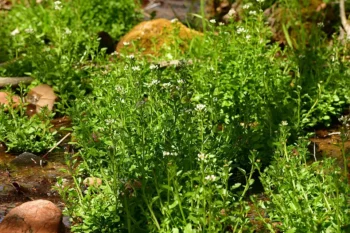
Streambank Bittercress: A Rare Gem for Specialized Wetland Gardens
Meet streambank bittercress (Cardamine micranthera), a delicate native wildflower that’s as rare as it is specialized. This little-known member of the mustard family might not be the showiest plant in your garden, but it plays a crucial role in our southeastern wetland ecosystems—and it desperately needs our help.
What Makes Streambank Bittercress Special?
Streambank bittercress is a native forb that calls the southeastern United States home, specifically thriving in the wetlands of North Carolina and Virginia. As a biennial or short-lived perennial, this herbaceous plant produces clusters of tiny white, four-petaled flowers that may be small but are perfectly formed gems when you look closely.
Unlike many garden plants, streambank bittercress is what botanists call an obligate wetland species in the Eastern Mountains and Piedmont regions. This means it almost exclusively lives in consistently wet conditions—think streambanks, seeps, and boggy areas where most other plants would struggle.
- Species observed
- No observations
A Plant in Peril
Here’s where things get serious: streambank bittercress is listed as Endangered and carries a Global Conservation Status of S2, meaning it’s imperiled due to extreme rarity. With typically only 6 to 20 known occurrences and fewer than 3,000 individuals remaining, this plant is teetering on the edge of extinction.
If you’re considering adding this plant to your garden, please only use responsibly sourced material from reputable native plant nurseries that practice ethical collection methods. Never collect from wild populations—every plant in the wild is precious for the species’ survival.
Is Streambank Bittercress Right for Your Garden?
Let’s be honest: this isn’t a plant for every gardener. Streambank bittercress has very specific needs that make it challenging to grow successfully. However, if you have the right conditions and want to contribute to conservation efforts, it can be a meaningful addition to specialized gardens.
Perfect for:
- Bog gardens and constructed wetlands
- Rain gardens with consistent moisture
- Streambank restoration projects
- Native plant conservation collections
- Specialized wildlife habitat gardens
Not ideal for:
- Traditional perennial borders
- Dry or well-drained garden beds
- Low-maintenance landscapes
- Beginner native plant gardens
Growing Conditions and Care
Streambank bittercress is extremely particular about its living conditions. In the wild, it thrives in USDA hardiness zones 6-8, always in areas with consistent moisture or standing water.
Essential Growing Requirements:
- Moisture: Consistently wet to boggy soil conditions
- Light: Partial shade to dappled sunlight
- Soil: Organic-rich, mucky, or sandy wetland soils
- pH: Neutral to slightly acidic conditions
- Drainage: Poor drainage is actually preferred—this plant loves wet feet
Wildlife and Ecosystem Benefits
While small in stature, streambank bittercress punches above its weight in ecological value. Its tiny flowers provide nectar for small pollinators, including native flies and small bees that specialize in early spring blooms. As part of the broader wetland ecosystem, it helps stabilize soil along waterways and contributes to the complex web of relationships that make healthy wetlands function.
A Conservation Conversation
Growing streambank bittercress isn’t just about adding another native plant to your collection—it’s about participating in conservation. Every garden that successfully grows this endangered species serves as a genetic reservoir and potential seed source for future restoration efforts.
If your property doesn’t have the consistently wet conditions this plant needs, consider creating a small bog garden or supporting wetland conservation organizations instead. Sometimes the best way to help a rare plant is to protect and restore its natural habitat.
Streambank bittercress reminds us that not every native plant is meant for every garden, and that’s okay. By understanding and respecting the specific needs of our rarest species, we become better stewards of the natural world—one specialized garden at a time.