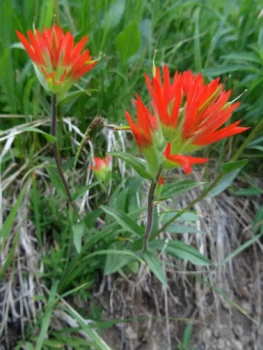
Suksdorf’s Indian Paintbrush: A Rare Pacific Northwest Gem
If you’ve ever wandered through the subalpine meadows of the Pacific Northwest and spotted splashes of brilliant red-orange that look like someone dipped paintbrushes in sunset colors, you’ve likely encountered Suksdorf’s Indian paintbrush (Castilleja suksdorfii). This stunning native perennial is one of nature’s most eye-catching wildflowers, though it comes with some unique challenges that make it quite different from your typical garden plant.
Where You’ll Find This Beauty
Suksdorf’s Indian paintbrush is a true Pacific Northwest native, calling Oregon and Washington home. This perennial forb thrives in the region’s subalpine and alpine meadows, where it’s perfectly adapted to the cool mountain conditions and seasonal rhythms of the Cascade Range and other high-elevation areas.
- Species observed
- No observations
What Makes It Special
Don’t let the name fool you – those brilliant red-orange paintbrushes aren’t actually flowers! They’re specialized leaves called bracts that steal the show while the real flowers hide modestly inside as small, tubular blooms. This clever design makes the plant incredibly attractive to hummingbirds and native bees, who appreciate both the nectar and the visual beacon these bright bracts provide.
As a herbaceous perennial, Suksdorf’s Indian paintbrush lacks woody stems but returns year after year, typically growing as a forb with soft, non-woody tissue. The plant has an interesting wetland status, classified as Facultative Wetland, meaning it usually grows in wetlands but can also thrive in drier conditions – making it quite adaptable within its native range.
A Word of Caution: Rarity Matters
Before you get too excited about adding this stunner to your garden, there’s something important to know: Suksdorf’s Indian paintbrush has a Global Conservation Status of S3?, which indicates some level of conservation concern. If you’re determined to grow this species, please only source it from reputable native plant nurseries that propagate their own stock rather than wild-collecting. Better yet, consider supporting habitat conservation efforts in its native range.
The Growing Challenge
Here’s where things get interesting (and a bit tricky): Suksdorf’s Indian paintbrush is what botanists call hemiparasitic. This means it’s partially parasitic on other plants, using specialized roots to tap into nearby host plants for some of its nutritional needs. This unique lifestyle makes it notoriously difficult to grow in typical garden settings.
If you’re up for the challenge, here’s what this plant needs:
- USDA Hardiness Zones 4-7 (it loves cool mountain climates)
- Well-draining soil that mimics its native alpine conditions
- Full sun to partial shade
- Host plants nearby (grasses and other native perennials work well)
- Patience – lots of it!
Garden Design Ideas
If you can successfully establish Suksdorf’s Indian paintbrush, it shines in:
- Alpine and rock gardens that mimic mountain meadow conditions
- Native plant gardens focused on Pacific Northwest species
- Wildflower meadows with diverse plantings
- Naturalistic landscapes that prioritize biodiversity
Supporting Wildlife
The brilliant bracts aren’t just for show – they serve as landing pads and nectar guides for hummingbirds, making this plant a valuable addition to pollinator-friendly gardens. Native bees also appreciate the nectar, and the plant contributes to the complex web of relationships that make mountain meadow ecosystems so special.
The Bottom Line
Suksdorf’s Indian paintbrush is undeniably gorgeous and ecologically valuable, but it’s not for every gardener or every garden. Its rarity status means we should approach it with respect and responsibility, and its challenging growing requirements mean it’s best suited for dedicated native plant enthusiasts with the right conditions.
If you’re passionate about Pacific Northwest natives and have the patience for a challenging but rewarding plant, this species can be a stunning addition to the right garden. Just remember to source responsibly and be prepared for a learning curve. Sometimes the most beautiful plants are the ones that keep us humble and remind us that we’re just temporary caretakers of nature’s incredible diversity.