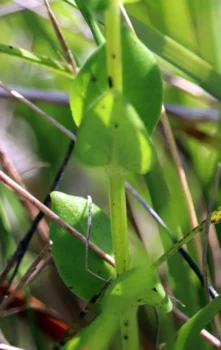
Swamp Hornpod: A Hidden Gem for Wetland Gardens
Meet the swamp hornpod (Mitreola sessilifolia), a charming little native annual that’s practically flying under the radar in most gardening circles. This southeastern beauty might not win any flashy flower contests, but it’s got some serious credentials when it comes to supporting local ecosystems and solving tricky wet spots in your landscape.
What Makes Swamp Hornpod Special?
Swamp hornpod is a native forb—basically a soft-stemmed plant without woody tissue—that calls the southeastern United States home. As an annual, it completes its entire life cycle in one growing season, but don’t let that fool you into thinking it’s a one-and-done plant. When happy, it’ll readily self-seed and return year after year.
This little plant belongs to a group with quite a few scientific aliases, including Cynoctonum sessilifolium and Mitreola angustifolia, so don’t be surprised if you see it listed under different names in older reference materials.
Where Does It Naturally Grow?
Swamp hornpod has made itself at home across the southeastern states, including Alabama, Arkansas, Florida, Georgia, Louisiana, Mississippi, New Mexico, North Carolina, Oklahoma, South Carolina, Texas, and Virginia. It’s particularly fond of the coastal plain regions where wet, boggy conditions are more common.
- Species observed
- No observations
A Word of Caution: Rarity Matters
Here’s something important to know before you go plant shopping: swamp hornpod is considered rare in some states. In Alabama, it’s ranked S1 (critically imperiled), and in Arkansas, it’s S2 (imperiled). This means if you’re interested in growing this plant, please make sure you source it responsibly from reputable native plant nurseries or seed suppliers—never collect from wild populations.
Garden Appeal and Landscape Role
Let’s be honest—swamp hornpod won’t stop traffic with its looks. The small white flowers are arranged in terminal spikes and have a modest, understated charm rather than showy appeal. But here’s where this plant really shines: it’s a problem-solver for those challenging wet spots in your landscape.
This plant excels in:
- Rain gardens and bioswales
- Wetland restoration projects
- Native plant collections
- Naturalized areas with seasonal flooding
- Wildlife habitat gardens
Growing Conditions and Care
Swamp hornpod is happiest in USDA hardiness zones 6-9, where it can enjoy the warm, humid conditions it craves. As its wetland status suggests, this plant is a moisture-lover that usually occurs in wetlands but can occasionally tolerate drier conditions.
For successful growing:
- Soil: Wet to consistently moist soils
- Light: Full sun to partial shade
- Water: High moisture requirements; tolerates seasonal flooding
- Maintenance: Very low once established in suitable conditions
Wildlife and Pollinator Benefits
While the flowers might look small and simple to us, they’re perfectly sized for small native bees and flies who appreciate the nectar and pollen. The plant’s role in wetland ecosystems also means it likely provides habitat and food sources for various wetland-dependent wildlife species.
Planting and Propagation Tips
Since swamp hornpod is an annual, growing it successfully means either purchasing plants each year or creating conditions where it can self-seed. The key is maintaining consistent moisture—this isn’t a plant for your typical perennial border or xeriscaped yard.
If you’re starting a wetland restoration project or have a naturally wet area that needs native plants, swamp hornpod could be an excellent choice. Just remember to source your plants or seeds responsibly, especially given its rarity status in some regions.
The Bottom Line
Swamp hornpod might not be the star of your garden show, but it’s exactly the kind of specialized native plant that dedicated wildlife gardeners and restoration enthusiasts should know about. If you have the right wet conditions and can source it responsibly, this little annual could become a valuable part of your native plant palette—quietly doing its part to support local ecosystems while solving your soggy soil problems.