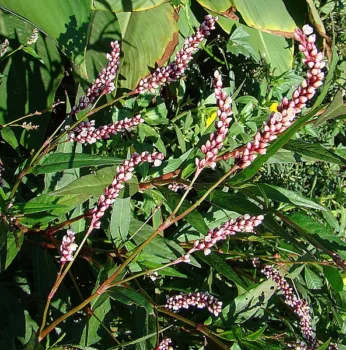
Swamp Smartweed: A Native Wetland Wonder for Your Rain Garden
If you’re looking to create a thriving wetland garden or need a reliable native plant for those soggy spots in your yard, swamp smartweed (Polygonum hydropiperoides) might just be your new best friend. This unassuming perennial forb has been quietly doing its thing across North America for centuries, and it’s ready to do the same in your landscape.
What Is Swamp Smartweed?
Swamp smartweed is a native North American perennial that belongs to the buckwheat family. Don’t let its modest appearance fool you – this hardy little plant is a wetland champion. As a forb (that’s garden-speak for a non-woody flowering plant), it grows low to the ground with a spreading habit that makes it perfect for naturalizing wet areas.
The plant produces small, greenish-white flowers arranged in terminal spikes during the summer months. While the blooms aren’t exactly showstoppers, they have their own subtle charm and serve an important ecological purpose. The narrow, lance-shaped leaves are dark green and create a fine-textured foliage that adds gentle movement to the garden.
Where Does It Call Home?
Talk about a well-traveled native! Swamp smartweed has an impressive natural range that spans from Alaska down to Puerto Rico and from coast to coast. You’ll find it growing wild in Alabama, Arizona, California, Florida, Maine, Texas, Washington, and just about everywhere in between – including Canadian provinces like British Columbia, Ontario, and Quebec.
- Species observed
- No observations
Why Consider Swamp Smartweed for Your Garden?
Here’s where this humble plant really shines. Swamp smartweed is classified as an Obligate Wetland species across all regions of North America, meaning it almost always occurs in wetlands. This makes it absolutely perfect for:
- Rain gardens that collect runoff
- Bog gardens and water features
- Wetland restoration projects
- Naturalized landscapes
- Areas with poor drainage
The plant’s slow growth rate and moderate lifespan make it a steady, reliable presence rather than an aggressive spreader. It grows in a single crown form with a decumbent (low-growing and spreading) shape, typically reaching 1-3 feet in height.
Growing Conditions: What Does It Need?
Swamp smartweed is surprisingly adaptable when it comes to growing conditions, but it does have some specific preferences:
Soil: It thrives in fine to medium-textured soils but struggles in coarse, sandy conditions. The plant can handle a wide pH range from 4.5 to 8.8, making it quite versatile.
Water: This is where swamp smartweed gets picky – it has high anaerobic tolerance and low drought tolerance, meaning it needs consistently moist to wet conditions. Think of it as the opposite of a desert plant!
Light: Despite being shade intolerant, it performs best in full sun to partial shade conditions.
Climate: Hardy in USDA zones 3-10, it can handle minimum temperatures down to 32°F and requires at least 95 frost-free days.
Planting and Care Tips
Growing swamp smartweed is refreshingly straightforward once you understand its needs:
- Propagation: Grow from seed, which is routinely available commercially. Each pound contains an impressive 612,963 seeds!
- Planting time: Seeds can be sown from spring through summer
- Soil preparation: Ensure the planting area stays consistently moist or wet
- Maintenance: Very low-maintenance once established; no fertilization typically needed
- Winter care: The plant doesn’t retain its leaves through winter, so expect it to die back
Important Conservation Note
Before you rush out to plant swamp smartweed, there’s something important to know: in New Jersey, this species has a rarity status of S2, meaning it’s considered imperiled in that state. If you’re gardening in New Jersey or other areas where it might be rare, please only use responsibly sourced material from reputable native plant nurseries. Never collect seeds or plants from wild populations.
Wildlife and Pollinator Benefits
While swamp smartweed’s flowers aren’t particularly showy, they do attract various small insects and flies during the summer blooming period. The plant provides habitat and food sources for wetland wildlife, though it’s not typically considered a major pollinator magnet compared to showier native options.
Is Swamp Smartweed Right for Your Garden?
Swamp smartweed is an excellent choice if you’re dealing with wet, poorly drained areas in your landscape or want to create authentic wetland habitat. It’s not the plant for dry gardens or areas where you want bold, colorful displays. Instead, think of it as a reliable supporting player in naturalized wetland settings.
This native gem proves that sometimes the most valuable garden plants are the quiet ones that simply do their job well, year after year. If you’ve got wet feet problems in your landscape, swamp smartweed might just be the solution you’ve been looking for.