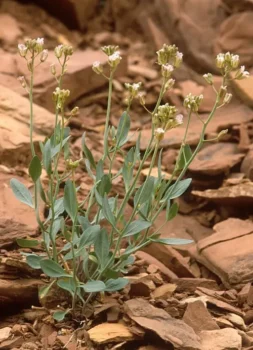
Syes Butte Plainsmustard: A Rare Desert Treasure That Belongs in the Wild
Meet one of Utah’s most exclusive residents: the Syes Butte plainsmustard (Schoenocrambe barnebyi). This isn’t your typical garden center find – in fact, it’s one of the rarest plants in North America, and there’s a very good reason why you won’t be adding it to your shopping cart anytime soon.
What Makes This Plant So Special?
The Syes Butte plainsmustard is a perennial forb in the mustard family, which means it’s an herbaceous plant that comes back year after year without developing woody stems. Like other members of the mustard clan, it’s a tough customer adapted to challenging conditions. However, this particular plainsmustard has taken exclusive to a whole new level.
A Plant with a Very Specific Address
When we say this plant is rare, we mean rare. Schoenocrambe barnebyi calls only one place home: Utah, and not just anywhere in Utah – it’s found in an extremely limited area around Syes Butte in Emery County. This makes it what botanists call an endemic species, essentially a plant that never left its original neighborhood.
- Species observed
- No observations
Why You Should Care (But Not Collect)
Here’s where things get serious: the Syes Butte plainsmustard holds a Global Conservation Status of S1, which translates to Critically Imperiled. In plain English, this means the species is hanging on by a thread, with typically five or fewer known locations and fewer than 1,000 individual plants remaining in the wild. It’s also federally listed as Endangered under the U.S. Endangered Species Act.
Important Conservation Alert: Due to its critically endangered status, this plant should never be collected from the wild, and any cultivation attempts should only be undertaken by qualified conservation professionals with proper permits and responsibly sourced material.
What We Know (And What We Don’t)
Because of its extreme rarity, much about this plant remains a mystery. We know it’s:
- A perennial that returns each growing season
- Classified as a forb (non-woody herbaceous plant)
- Adapted to the specific conditions found around Syes Butte
- Part of the mustard family (Brassicaceae)
What we don’t know includes details about its flowers, growth habits, specific habitat requirements, or how it might interact with pollinators – information that’s typically gathered through extensive field studies that are challenging when working with such a rare species.
The Bottom Line for Gardeners
While the Syes Butte plainsmustard is undoubtedly a fascinating piece of Utah’s natural heritage, it’s not a plant for home gardens. Its critically endangered status means it needs every individual left in the wild to focus on survival and reproduction in its natural habitat.
If you’re interested in growing native Utah plants, consider other members of the mustard family that are more common and available through reputable native plant nurseries. Many of these alternatives can provide similar ecological benefits without putting pressure on endangered species.
How You Can Help
The best way to support the Syes Butte plainsmustard is to:
- Respect its habitat if you’re ever in the area
- Support conservation organizations working to protect Utah’s rare plants
- Choose abundant native species for your own garden
- Spread awareness about the importance of protecting endangered plants
Sometimes the most beautiful thing we can do for a plant is simply let it be wild and free in the place it calls home. The Syes Butte plainsmustard is a reminder that not every plant needs to be in our gardens – some are perfectly content being Utah’s best-kept secret, growing quietly on a butte where they’ve thrived for thousands of years.