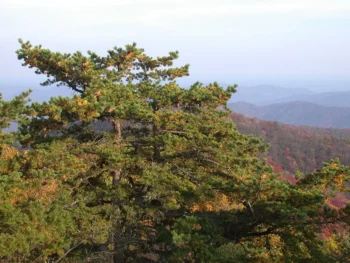
Table Mountain Pine: A Rugged Native Conifer for Challenging Sites
If you’re looking for a tough-as-nails native pine that thrives where other trees fear to tread, meet the Table Mountain Pine (Pinus pungens). This hardy Appalachian native has earned its stripes surviving on rocky outcrops and poor soils that would send most trees packing. But before you rush to plant one, there are some important considerations – especially regarding its conservation status in certain areas.
What Makes Table Mountain Pine Special
Table Mountain Pine is a true survivor, perfectly adapted to life on the edge – literally. This perennial conifer develops into a distinctive tree with a conical shape when young, gradually becoming more irregular and characterfully gnarled with age. The dense, dark green needles and attractive reddish-brown bark make it a standout specimen, even in harsh conditions.
As a native species to the lower 48 states, this pine plays an important ecological role in its mountain habitats. It’s a slow but steady grower, reaching about 25 feet in 20 years and eventually maturing to around 50 feet tall.
Where Table Mountain Pine Calls Home
This mountain specialist naturally grows across the Appalachian region, including District of Columbia, Georgia, Illinois, Maryland, New Jersey, North Carolina, Pennsylvania, South Carolina, Tennessee, Virginia, and West Virginia. You’ll typically find it clinging to dry, rocky slopes and ridges at elevations between 1,000 and 4,000 feet.
- Species observed
- No observations
Important Conservation Note
Here’s where things get serious: In New Jersey, Table Mountain Pine has a rarity status of Endangered and is listed as S1.1, meaning it’s critically imperiled in the state. If you’re considering planting this species, please ensure you source it responsibly from reputable nurseries that propagate their own stock rather than wild-collecting. Never harvest seeds or plants from wild populations.
Is Table Mountain Pine Right for Your Garden?
This pine is perfect for gardeners who:
- Have challenging sites with poor, rocky, or sandy soils
- Want a drought-tolerant native tree
- Are creating naturalistic or mountain-themed landscapes
- Need erosion control on slopes
- Appreciate unique, characterful tree forms
However, it might not be the best choice if you’re looking for fast results, as this is definitely a slow and steady wins the race kind of tree.
Growing Conditions
Table Mountain Pine is refreshingly low-maintenance once you understand its preferences:
- Sunlight: Full sun is essential – this tree is shade intolerant
- Soil: Adaptable to coarse, medium, or fine textured soils, but drainage is key
- pH: Prefers acidic to neutral soils (4.5-7.0)
- Water: Highly drought tolerant with low moisture requirements
- Hardiness: Thrives in USDA zones 5-8
- Temperature: Can handle temperatures down to -18°F
Planting and Care Tips
Getting your Table Mountain Pine off to a good start is straightforward:
- Timing: Plant in spring or early fall
- Spacing: Allow plenty of room – plant 300-1,200 trees per acre depending on your goals
- Soil prep: Ensure excellent drainage; this tree despises soggy conditions
- Fertilizing: Keep it minimal – this pine prefers low fertility conditions
- Watering: Water during establishment, then let nature take over
- Pruning: Generally unnecessary except to remove damaged branches
Propagation
Table Mountain Pine is routinely available from nurseries and can be propagated by seed, bare root, or container plants. Seeds are abundant and persistent, with about 34,200 seeds per pound. The bloom period occurs in mid-spring, with seeds developing through summer and fall.
Landscape Uses
This versatile pine works beautifully in:
- Native plant gardens
- Rock gardens and xeriscapes
- Naturalized areas
- Slope stabilization projects
- Wildlife habitat gardens
- Mountain-themed landscapes
Wildlife and Ecological Benefits
While Table Mountain Pine is wind-pollinated (so it won’t attract bees and butterflies like flowering plants), it provides valuable habitat and food sources for various wildlife species. Birds may use the dense foliage for nesting, and the seeds can provide food for wildlife.
The Bottom Line
Table Mountain Pine is a fantastic choice for gardeners who want a tough, native conifer that can handle challenging conditions with minimal fuss. Its unique character and ecological value make it a worthy addition to the right garden. Just remember to source it responsibly, especially given its endangered status in some areas, and be patient – this tree rewards those who think in decades rather than seasons.
If you’re working with difficult, dry sites where other trees struggle, Table Mountain Pine might just be the rugged survivor your landscape needs.