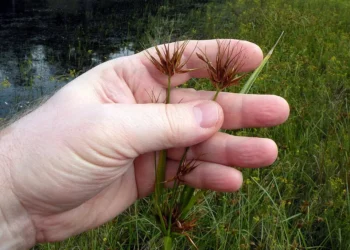
Tall Horned Beaksedge: A Native Wetland Sedge for Specialized Gardens
If you’re passionate about native plants and have a consistently moist spot in your garden, tall horned beaksedge (Rhynchospora macrostachya) might be exactly what you’re looking for. This unassuming perennial sedge brings authentic wetland character to rain gardens, bog plantings, and naturalized landscapes across much of the eastern and central United States.
What Makes Tall Horned Beaksedge Special?
Don’t let the humble appearance fool you – this grass-like plant plays an important ecological role in wetland ecosystems. As a member of the sedge family (Cyperaceae), tall horned beaksedge produces distinctive triangular seed heads that add subtle textural interest to plantings while providing valuable food for birds and small wildlife.
The plant gets its common name from those characteristic seed heads, which are brownish and clustered at the tips of the stems, resembling tiny horns. While it may not win any awards for flashy flowers, its quiet beauty and ecological value make it a worthy addition to the right garden setting.
Where Does It Grow Naturally?
Tall horned beaksedge is native to the lower 48 states and naturally occurs across a impressive range, including Alabama, Arkansas, Connecticut, Delaware, District of Columbia, Florida, Georgia, Illinois, Indiana, Kansas, Kentucky, Louisiana, Maine, Maryland, Massachusetts, Michigan, Mississippi, Missouri, New Jersey, New York, North Carolina, Oklahoma, Rhode Island, South Carolina, Tennessee, Texas, Vermont, and Virginia.
- Species observed
- No observations
Important Conservation Note
Before you rush to add this plant to your garden, there’s something important to know: tall horned beaksedge has a rarity status of S2 in Arkansas, meaning it’s considered imperiled in that state. If you’re interested in growing this plant, please source it responsibly from reputable native plant nurseries rather than collecting from wild populations. This helps protect natural stands while still allowing you to enjoy this special sedge in your garden.
Is It Right for Your Garden?
Tall horned beaksedge is definitely not a plant for every garden situation. It’s classified as an obligate wetland plant across all regions where it grows, which means it almost always occurs in wetlands and requires consistently moist to wet conditions. Here’s what you need to know:
- Perfect for: Rain gardens, bog gardens, wetland restorations, and naturalized areas with reliable moisture
- Not suitable for: Traditional perennial borders, xeriscapes, or areas that dry out regularly
- USDA Hardiness Zones: 3-9
- Light requirements: Full sun to partial shade
Growing Tall Horned Beaksedge Successfully
If you have the right conditions, this sedge can be surprisingly easy to grow:
- Soil: Consistently moist to wet soils; tolerates seasonal flooding
- Planting time: Spring is ideal for establishment
- Maintenance: Minimal once established – this is a low-maintenance plant that takes care of itself
- Spread: Can spread by rhizomes in ideal conditions, making it useful for naturalizing larger areas
Wildlife and Ecological Benefits
While tall horned beaksedge is wind-pollinated and doesn’t provide nectar for pollinators, it offers other valuable ecological benefits. The seeds serve as food for various bird species and small wildlife, and the plant structure provides habitat and cover in wetland environments. It’s also an authentic component of native wetland plant communities, helping to recreate natural ecosystems in garden settings.
The Bottom Line
Tall horned beaksedge isn’t for every gardener, but for those with appropriate wetland conditions and an interest in native plant communities, it’s a valuable addition. Its quiet beauty, ecological benefits, and low-maintenance nature make it particularly appealing for naturalized gardens and restoration projects. Just remember to source it responsibly to help protect wild populations of this regionally rare sedge.
If you’re creating a rain garden, restoring a wetland area, or simply want to add authentic native character to a consistently moist spot in your landscape, tall horned beaksedge deserves serious consideration. It may not be the showiest plant in your garden, but it will certainly be one of the most ecologically valuable.