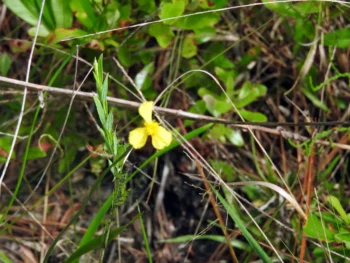
Tall Yelloweyed Grass: A Delicate Beauty for Wetland Gardens
If you’re looking to add a touch of understated elegance to your wetland garden or rain garden, tall yelloweyed grass (Xyris platylepis) might just be the perfect choice. This charming perennial brings a subtle beauty that’s often overlooked in the world of flashy garden favorites, but don’t let its modest appearance fool you – this little gem has plenty to offer the right gardener.
What Is Tall Yelloweyed Grass?
Tall yelloweyed grass is a perennial forb, which means it’s a non-woody plant that comes back year after year. Despite its common name, it’s not actually a grass at all! This plant belongs to a unique family that produces small, bright yellow flowers that seem to peek out like tiny eyes from slender stems – hence the yellow-eyed part of its name.
As a forb, this plant lacks significant woody tissue and keeps its growing points right at or below ground level, making it perfectly adapted to wet conditions where it thrives.
Where Does It Call Home?
Tall yelloweyed grass is native to the southeastern United States, naturally growing across Alabama, Florida, Georgia, Louisiana, Mississippi, North Carolina, South Carolina, Texas, and Virginia. Interestingly, it has also established itself in Hawaii, where it’s considered a non-native species that reproduces on its own in the wild.
- Species observed
- No observations
The Wetland Connection
Here’s where things get interesting for water gardeners and wetland enthusiasts. In its native range across the Atlantic and Gulf Coastal Plains and the Eastern Mountains and Piedmont regions, tall yelloweyed grass has Obligate Wetland status. This fancy term simply means it almost always grows in wetlands – it’s practically married to moist conditions!
In Hawaii, it’s classified as Facultative Wetland, meaning it usually prefers wet spots but can tolerate some drier conditions. This flexibility makes it an excellent choice for gardeners dealing with varying moisture levels.
Growing Tall Yelloweyed Grass Successfully
Perfect Growing Conditions
- Light: Full sun to partial shade
- Soil: Consistently moist to wet, acidic soils preferred
- Hardiness: USDA zones 7-10
- Moisture: Loves wet feet – perfect for bog gardens and rain gardens
Planting and Care Tips
The beauty of tall yelloweyed grass lies in its low-maintenance nature. Plant it in spring when the soil is workable, and make sure to choose a location that stays consistently moist. Once established, this tough little plant requires minimal fussing – just keep it happy with adequate moisture and it’ll reward you with its delicate blooms.
Since it’s adapted to wetland conditions, you won’t need to worry about overwatering like you might with other garden plants. In fact, the wetter, the better!
Garden Design and Landscape Role
Tall yelloweyed grass shines as an accent plant in naturalistic settings. It’s perfect for:
- Rain gardens that need plants to handle periodic flooding
- Bog gardens alongside other moisture-loving natives
- Wetland restoration projects
- Naturalistic landscapes that mimic native ecosystems
The plant’s delicate yellow flowers and grass-like foliage create a soft, naturalistic texture that pairs beautifully with other wetland natives. It’s not a showstopper that demands center stage, but rather a supporting player that adds subtle charm and ecological value.
Benefits for Pollinators and Wildlife
While tall yelloweyed grass may look delicate, it pulls its weight in supporting local ecosystems. The small yellow flowers attract native bees and other pollinators who appreciate this reliable nectar source in wetland environments where flowering options can be limited.
Should You Plant It?
If you’re gardening within its native range in the southeastern United States and have consistently moist to wet conditions, tall yelloweyed grass can be a wonderful addition to your landscape. It’s particularly valuable for gardeners focused on native plant gardening, wetland restoration, or creating habitat for local wildlife.
For gardeners outside its native range, consider exploring your local native alternatives for wetland gardens. Every region has its own beautiful native plants that are better adapted to local conditions and more beneficial to local wildlife.
The bottom line? Tall yelloweyed grass is a charming, low-maintenance option for the right garden in the right location. If you have a wet spot that needs a delicate touch of yellow and you’re in the Southeast, this little beauty might be exactly what you’re looking for!