Teddybear Cholla: The Deceptively Cuddly Desert Beauty
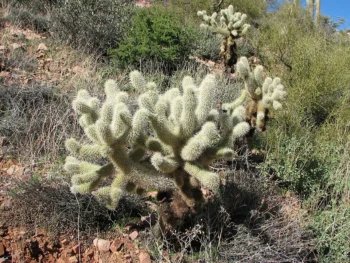
Don’t let the adorable name fool you – the teddybear cholla (Cylindropuntia bigelovii) might look huggable from afar, but this spiny desert dweller is definitely a look but don’t touch kind of plant! This fascinating native cactus has earned its teddy bear moniker from its fuzzy appearance, created by dense clusters of golden spines that shimmer in the desert sun like the softest fur.
What Makes Teddybear Cholla Special?
The teddybear cholla is a true native gem, naturally found across the Sonoran Desert regions of Arizona, California, and Nevada. This perennial shrub typically grows as a multi-stemmed woody plant, usually staying under 13-16 feet tall, making it a manageable size for most desert landscapes. You might also see it listed under its former scientific name, Opuntia bigelovii, but it’s the same wonderfully weird plant.
What really sets this cactus apart is its unique cylindrical segments covered in incredibly dense, barbed spines that create that distinctive teddy bear silhouette. The golden to silvery spines catch the light beautifully, creating an almost ethereal glow that’s particularly stunning during sunrise and sunset.
- Species observed
- No observations
Should You Plant Teddybear Cholla in Your Garden?
Before you fall head-over-heels for this desert charmer, there are some important considerations. The teddybear cholla has a Global Conservation Status of S3?, which indicates some level of conservation concern. If you do decide to add one to your landscape, make sure you source it responsibly from reputable native plant nurseries rather than collecting from the wild.
Reasons you might love teddybear cholla:
- Stunning architectural form that serves as a dramatic focal point
- Beautiful yellow flowers in spring that attract desert pollinators like bees
- Extremely drought-tolerant once established
- Year-round visual interest with its unique texture and form
- Perfect for authentic desert and xeriscape gardens
- Low maintenance once properly established
Reasons you might want to think twice:
- The barbed spines are incredibly painful and difficult to remove
- Not suitable for high-traffic areas or homes with children and pets
- Only thrives in very specific hot, dry conditions (USDA zones 9-11)
- Segments can detach easily and potentially spread
- Limited availability due to conservation status
Creating the Perfect Home for Your Teddybear Cholla
If you’ve decided this spiky beauty is right for your landscape, success lies in mimicking its natural desert habitat. Teddybear cholla absolutely demands full sun and extremely well-draining soil. Think sandy, rocky, or gravelly soil that never stays wet – soggy conditions are a death sentence for this desert native.
The key growing conditions include:
- Full sun exposure (6+ hours daily)
- Sandy or rocky, fast-draining soil
- Minimal water once established
- Hot, dry climate conditions
- Protection from freezing temperatures
Planting and Care Tips
Plant your teddybear cholla in fall or early spring when temperatures are milder. Dig a hole no deeper than the root ball and twice as wide, ensuring excellent drainage by amending heavy soils with coarse sand or gravel. Water sparingly during the establishment period, then cut back to minimal supplemental irrigation.
Essential care reminders:
- Always wear thick gloves and long sleeves when working around the plant
- Water deeply but infrequently – overwatering is the quickest way to kill it
- Avoid fertilizing – these plants thrive in nutrient-poor soils
- Pruning is rarely needed and should be done with extreme caution
- Keep pets and children at a safe distance
Design Ideas and Landscape Role
Teddybear cholla works beautifully as a specimen plant or focal point in desert-themed gardens, xeriscapes, and rock gardens. Its unique form provides excellent contrast when paired with lower-growing desert plants like brittlebush, desert marigold, or various agaves. The architectural quality makes it perfect for modern, minimalist landscapes that celebrate the beauty of arid-adapted plants.
Consider placing it where its form can be appreciated from a distance – perhaps as a centerpiece in a gravel garden or as an accent near a seating area (but not too close!). The spring flowers add a lovely pop of yellow color that desert pollinators will appreciate.
The Bottom Line
Teddybear cholla is undeniably captivating and perfect for the right garden situation. If you live in the appropriate climate zone, have the right growing conditions, and can source it responsibly, this native beauty can be a stunning addition to your desert landscape. Just remember to respect both the plant and its conservation status – admire its teddy bear charm from a safe distance and help preserve this unique piece of our native desert heritage.