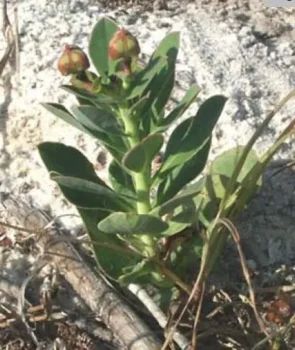
Telephus Spurge: A Rare Florida Native Worth Protecting
Meet Euphorbia telephioides, commonly known as telephus spurge—one of Florida’s most endangered plant treasures. If you’ve never heard of this little-known native, you’re not alone. This critically rare perennial is so uncommon that most gardeners will never encounter it in their lifetime, making it more of a conservation curiosity than a garden staple.
What Makes Telephus Spurge Special?
Telephus spurge belongs to the diverse Euphorbia family, known for their distinctive milky sap and unique flower structures. As a perennial forb (that’s botanist-speak for a non-woody herbaceous plant), this Florida endemic has adapted to very specific conditions found nowhere else on Earth.
The plant goes by the scientific name Euphorbia telephioides, though you might occasionally see it referenced by its synonym, Galarhoeus telephioides. However, don’t expect to find either name in your typical gardening catalog—and here’s why.
A Conservation Crisis
Here’s where things get serious: telephus spurge is critically imperiled with a global conservation status of S1. In plain terms, this means there are typically five or fewer known populations in existence, with fewer than 1,000 individual plants remaining in the wild. It’s officially listed as Threatened in the United States, making it one of Florida’s most endangered plant species.
Geographic Distribution
Telephus spurge is found exclusively in Florida, making it a true endemic species. Its extremely limited range contributes significantly to its precarious conservation status.
- Species observed
- No observations
Should You Plant Telephus Spurge?
The short answer: probably not, and here’s why.
While we’d love to encourage everyone to grow native plants, telephus spurge presents a unique ethical dilemma. Its extreme rarity means that:
- Seeds or plants are virtually impossible to obtain through legitimate channels
- Any wild collection would further threaten the species
- Its specific growing requirements are poorly understood
- Conservation efforts should focus on habitat protection rather than cultivation
If you’re absolutely determined to grow this species, it should only be attempted with material from verified conservation programs or botanical institutions—and even then, only as part of legitimate conservation efforts.
What We Don’t Know (And Why That Matters)
The scarcity of telephus spurge means we lack crucial information about:
- Specific growing conditions and soil preferences
- Pollinator relationships and wildlife benefits
- Propagation methods and germination requirements
- Ideal garden applications and landscape roles
This knowledge gap makes successful cultivation nearly impossible for home gardeners.
Supporting Conservation Instead
Rather than trying to grow telephus spurge, consider these meaningful alternatives:
- Support Florida native plant conservation organizations
- Choose other native Florida Euphorbia species that are more common
- Focus on creating habitat for endangered species through native landscaping
- Participate in citizen science projects that help monitor rare plant populations
The Bigger Picture
Telephus spurge serves as a reminder of how much botanical diversity we stand to lose. While this particular species may not grace our gardens, learning about it helps us appreciate the incredible—and fragile—native plant heritage of Florida.
Sometimes the best way to honor a rare native plant isn’t to grow it, but to protect the wild spaces where it belongs. By choosing abundant native alternatives and supporting conservation efforts, we can help ensure that future generations might still have the chance to encounter telephus spurge in its natural habitat.
After all, some plants are simply too precious to risk—and that’s okay. There are plenty of other beautiful Florida natives waiting to transform your garden while leaving the rarest species safe in the wild where they belong.