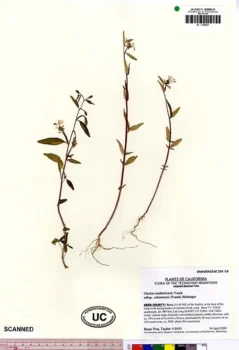
Temblor Range Clarkia: A Rare California Wildflower Worth Protecting
If you’re passionate about California native plants and love supporting conservation efforts right in your own backyard, the Temblor Range clarkia might just capture your heart. This delicate annual wildflower, scientifically known as Clarkia tembloriensis, is a true California endemic that brings both beauty and ecological importance to native gardens.
What Makes This Plant Special
The Temblor Range clarkia is a charming annual forb that produces lovely four-petaled flowers in shades of pink to purple. As a member of the evening primrose family, it shares the characteristic cup-shaped blooms that make clarkias so beloved by wildflower enthusiasts. This herbaceous plant lacks woody tissue and completes its entire life cycle in a single growing season, making it a perfect candidate for seasonal garden interest.
Where It Calls Home
This special wildflower is found exclusively in California, making it a true Golden State treasure. Specifically, it’s native to the Temblor Range in the southern San Joaquin Valley, which is exactly how it got its common name. Talk about a plant with a strong sense of place!
- Species observed
- No observations
Important Conservation Note
Here’s something every responsible gardener should know: Temblor Range clarkia has a Global Conservation Status of S3, meaning it’s considered vulnerable. With only 21 to 100 known occurrences and an estimated 3,000 to 10,000 individual plants in the wild, this species needs our help. If you’re interested in growing this rare beauty, please ensure you source seeds or plants only from reputable native plant societies, botanical gardens, or conservation organizations that propagate from legally collected, responsibly sourced material.
Garden Appeal and Design Role
While it may be small in stature, the Temblor Range clarkia packs a big punch in the right setting. It’s perfect for:
- Conservation-focused native gardens
- Specialized California wildflower meadows
- Educational demonstration gardens
- Rock gardens with California natives
- Areas where you want to showcase rare local flora
This isn’t your typical showy garden centerpiece, but rather a plant for gardeners who appreciate subtlety and ecological significance over flashy blooms.
Growing Conditions and Care
Like many California natives, Temblor Range clarkia has adapted to the state’s Mediterranean climate and prefers:
- Full sun exposure
- Well-draining, sandy or clay soils
- Low water requirements once established
- USDA hardiness zones 8-10
- Minimal summer irrigation (drought tolerant)
Planting and Propagation Tips
Growing this annual successfully requires understanding its natural life cycle:
- Direct seed in fall for best results
- Seeds need winter chill period to germinate properly
- Germination typically occurs with spring warming
- Plants will flower and set seed before summer heat
- Allow plants to self-seed for future seasons
Remember, patience is key with this species – it follows nature’s timeline, not ours!
Supporting Pollinators
Despite its rarity, Temblor Range clarkia plays an important role in supporting native bee populations and other small pollinators. By growing this plant responsibly, you’re not just adding beauty to your garden – you’re contributing to the conservation of an entire ecosystem web.
Should You Grow It?
If you’re a dedicated native plant gardener with a passion for conservation and you can source this plant responsibly, absolutely! However, this isn’t a plant for casual gardeners or those looking for easy, showy blooms. Consider growing Temblor Range clarkia if you:
- Are committed to conservation gardening
- Have experience with California native annuals
- Can provide appropriate growing conditions
- Want to contribute to species preservation
- Appreciate rare and unique plants
By choosing to grow this vulnerable species responsibly, you become part of a conservation effort that helps ensure future generations can enjoy this special piece of California’s natural heritage. Now that’s what we call gardening with purpose!