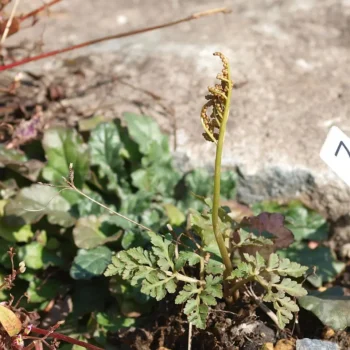
Ternate Grapefern: A Rare Native Treasure for Woodland Gardens
If you’ve ever wandered through a northeastern woodland and spotted what looks like a tiny, delicate fern with grape-like clusters, you might have encountered the ternate grapefern (Botrychium rugulosum). This remarkable little native fern is one of nature’s more mysterious plants, and while it’s not your typical garden center find, it’s absolutely fascinating for those lucky enough to observe it in the wild.
What Makes Ternate Grapefern Special?
The ternate grapefern is a perennial fern that’s quite different from the lush, leafy ferns most gardeners know. Instead of the typical frilly fronds, this species produces a distinctive two-part structure: a sterile leaf blade and a separate fertile spike topped with grape-like clusters of sporangia (that’s where the spores develop). It’s this unique appearance that gives the plant both its common name and its charm.
This native beauty calls northeastern North America home, thriving in the cool, moist conditions of Canada and the northern United States. You’ll find populations scattered across New Brunswick, Ontario, Quebec, Connecticut, Michigan, Minnesota, New York, Vermont, and Wisconsin.
- Species observed
- No observations
A Word of Caution: Rarity Matters
Here’s something important every nature lover should know: ternate grapefern has a Global Conservation Status of S3, meaning it’s considered vulnerable. With typically only 21 to 100 occurrences and between 3,000 to 10,000 individuals worldwide, this isn’t a plant to take lightly. If you’re considering adding it to your woodland garden, please ensure any plant material comes from responsible, ethical sources—never wild-collected specimens.
Where Does It Fit in Your Garden?
Let’s be honest: ternate grapefern isn’t for everyone or every garden. This specialized native thrives in very specific conditions that can be challenging to replicate in typical home landscapes. It prefers:
- Partial to full shade
- Moist, well-drained woodland soils
- Cool, humid conditions
- Undisturbed natural settings
If you have a mature woodland garden or a naturalized area that mimics northeastern forest conditions, and you can source plants responsibly, ternate grapefern could be a fascinating addition to a native plant collection.
Growing Challenges and Realistic Expectations
This is where we need to have a frank conversation. Ternate grapefern, like many Botrychium species, has very specific ecological requirements that make it notoriously difficult to cultivate. These ferns depend on complex relationships with soil fungi (mycorrhizae) that are hard to replicate in garden settings. Even experienced native plant gardeners often find success elusive.
The plant is hardy in USDA zones 3-7, but hardiness zones are just one piece of the puzzle. Success depends more on recreating the specific soil conditions, moisture levels, and fungal partnerships found in its natural habitat.
Wildlife and Ecological Benefits
While ternate grapefern may not provide the showy pollinator benefits of flowering natives, it plays its own quiet role in woodland ecosystems. As a native species, it’s part of the intricate web of relationships that support healthy forest understories, even if those connections aren’t always visible to us.
The Bottom Line
Ternate grapefern is more of a stop and appreciate plant than a grow in your garden plant. Its rarity and specialized growing requirements make it better suited for observation and protection in its natural habitats rather than cultivation in home landscapes. If you’re passionate about native ferns and have the perfect woodland conditions, consider supporting conservation efforts for this species rather than attempting to grow it yourself.
For gardeners seeking easier-to-grow native ferns for woodland settings, consider alternatives like Christmas fern, lady fern, or royal fern—all of which offer beauty and ecological benefits without the conservation concerns.