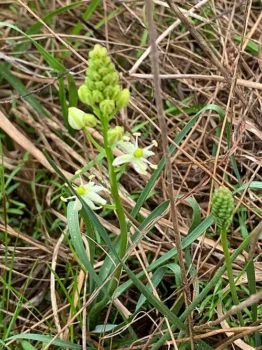
Texas Sunnybell: A Rare Wetland Gem Worth Protecting
Meet the Texas sunnybell (Schoenolirion wrightii), a delicate native perennial that’s as charming as it is elusive. This little-known wildflower might not be the showiest plant in your garden, but it’s got something special that makes it worth knowing about – and perhaps even growing, if you can source it responsibly.
What Makes Texas Sunnybell Special?
Texas sunnybell is a native forb that calls the southeastern United States home. Unlike woody shrubs or trees, this herbaceous perennial dies back to the ground each winter and emerges fresh each spring. Its grass-like foliage might fool you at first glance, but come blooming time, delicate white to cream-colored flowers arranged in tall, slender racemes give away its true identity.
This plant goes by the scientific name Schoenolirion wrightii, and you might occasionally see it listed under its older synonyms Oxytria texana or Schoenolirion texanum in some reference materials.
Where Does It Grow Naturally?
Texas sunnybell has a somewhat scattered distribution across the southeastern states, naturally occurring in Alabama, Arkansas, Louisiana, North Carolina, and Texas. Despite its common name suggesting a Texas origin, this plant actually has a broader southeastern range.
- Species observed
- No observations
A Plant That Needs Our Help
Here’s where things get serious: Texas sunnybell is considered globally vulnerable, with a conservation status of S3. This means it’s at risk throughout its range due to habitat loss and other factors. In Alabama, it’s even more precarious with an S1 status (critically imperiled), while Arkansas populations hover between S2-S3 (imperiled to vulnerable).
If you’re considering adding this plant to your garden, please only source it from reputable native plant nurseries that propagate their stock rather than wild-collecting. Never harvest this plant from the wild – its rarity means every population counts.
The Wetland Connection
Texas sunnybell is a wetland specialist, and this is crucial to understand if you want to grow it successfully. In most of its range, it’s classified as an obligate wetland plant, meaning it almost always occurs in wetlands. Only in the Great Plains region does it show up occasionally in non-wetland areas.
This wetland preference means Texas sunnybell isn’t your typical garden perennial. It needs consistently moist to wet soils and won’t tolerate typical garden conditions.
Growing Texas Sunnybell: Not for Beginners
Let’s be honest – Texas sunnybell isn’t the easiest plant to grow, and it’s definitely not for every garden. Here’s what you need to know:
- USDA Hardiness Zones: 6-9
- Light requirements: Full sun to partial shade
- Soil needs: Consistently moist to wet, bog-like conditions
- Best garden types: Bog gardens, rain gardens, wetland restoration projects
This plant really shines in specialized water gardens or naturalistic wetland settings. If you have a spot that stays soggy year-round – the kind of place other plants rot – Texas sunnybell might just thrive there.
Care Tips for Success
If you’re determined to grow Texas sunnybell, here are some tips:
- Never let the soil dry out – consistent moisture is non-negotiable
- Consider growing it in a container that can sit in a water tray
- Be patient – this plant can be slow to establish
- Provide winter protection in the northern parts of its range
Wildlife and Pollinator Value
While specific wildlife benefits aren’t well-documented, Texas sunnybell likely provides nectar for small pollinators during its blooming period. As a native wetland plant, it also contributes to the overall ecosystem health of wetland habitats.
Should You Grow Texas Sunnybell?
Texas sunnybell is a plant for gardeners with very specific conditions and a conservation mindset. If you have a bog garden, wetland restoration project, or consistently wet area that needs native plants, and you can source it responsibly, this rare beauty could be a meaningful addition.
However, if you’re looking for an easy-care native perennial for typical garden conditions, you’d be better served by other southeastern natives that are more adaptable and less rare.
Remember, growing rare natives like Texas sunnybell is as much about conservation as it is about gardening. By cultivating responsibly sourced plants, you’re helping preserve genetic diversity and potentially contributing to future conservation efforts. Just make sure you’re up for the challenge of meeting its specific needs!