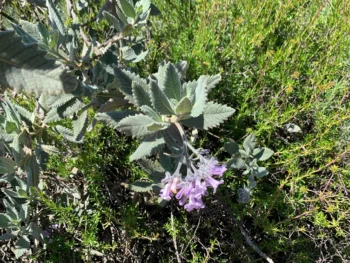
Thickleaf Yerba Santa: A Hidden Gem for California Native Gardens
If you’re looking to add a touch of California’s wild beauty to your garden while supporting local wildlife, thickleaf yerba santa (Eriodictyon crassifolium var. crassifolium) might just be the perfect choice. This evergreen shrub brings year-round structure and seasonal blooms to drought-tolerant landscapes, all while requiring minimal care once established.
What Makes Thickleaf Yerba Santa Special?
Thickleaf yerba santa is a true California native, found naturally in the Golden State’s chaparral and oak woodland communities. As its common name suggests, this perennial shrub sports distinctively thick, leathery leaves that help it thrive in California’s Mediterranean climate. The plant typically grows as a multi-stemmed woody shrub, usually staying under 13-16 feet in height, making it a manageable size for most home landscapes.
Geographic Distribution and Conservation Status
This native beauty calls California home, where it has adapted perfectly to the state’s unique climate and growing conditions. However, it’s important to note that thickleaf yerba santa has a Global Conservation Status of S3T3, indicating it’s considered vulnerable in its native range.
- Species observed
- No observations
Important note for responsible gardeners: Due to its vulnerable conservation status, if you choose to grow thickleaf yerba santa, please ensure you source your plants from reputable native plant nurseries that propagate their own stock rather than collecting from wild populations.
Garden Appeal and Landscape Uses
Thickleaf yerba santa offers several appealing features for the home gardener:
- Evergreen foliage provides year-round structure and color
- Clusters of white to pale lavender tubular flowers create seasonal interest
- Thick, textural leaves add visual depth to plantings
- Excellent drought tolerance once established
- Low maintenance requirements
This shrub works beautifully in Mediterranean-style gardens, native plant landscapes, and naturalized areas. It’s particularly well-suited for gardeners looking to create wildlife-friendly spaces while conserving water.
Wildlife and Pollinator Benefits
The tubular flowers of thickleaf yerba santa are magnets for pollinators, attracting bees, butterflies, and hummingbirds to your garden. By planting this native species, you’re providing essential resources for local wildlife while supporting the broader ecosystem.
Growing Conditions and Care
One of the best things about thickleaf yerba santa is how well-adapted it is to California’s climate. Here’s what you need to know:
- Sun requirements: Full sun to partial shade
- Soil: Well-draining soils; adaptable to various soil types
- Water needs: Drought tolerant once established; minimal summer water needed
- USDA Hardiness Zones: 8-10
- Maintenance: Low; light pruning after flowering if desired
Planting and Care Tips
Getting started with thickleaf yerba santa is refreshingly straightforward:
- Plant in fall or early spring for best establishment
- Ensure good drainage to prevent root rot
- Water regularly the first year to help establish roots
- Once established, reduce watering significantly
- Prune lightly after flowering to maintain shape if desired
- Mulch around the base to retain moisture and suppress weeds
Is Thickleaf Yerba Santa Right for Your Garden?
This native shrub is an excellent choice if you:
- Live in USDA zones 8-10
- Want to support local wildlife and pollinators
- Prefer low-maintenance, drought-tolerant plants
- Are creating a native plant or Mediterranean-style garden
- Value plants with year-round interest
Remember, by choosing to grow thickleaf yerba santa from responsibly sourced plants, you’re not only adding a beautiful and functional plant to your landscape but also supporting conservation efforts for this vulnerable native species. It’s a win-win for both your garden and California’s natural heritage!