Thinleaf Sedge: A Delicate Native Groundcover for Shady Spaces
If you’re looking for a subtle yet effective native groundcover that thrives in shadier spots, thinleaf sedge (Carex cephaloidea) might just be your new garden companion. This perennial sedge brings quiet elegance to woodland settings while supporting local ecosystems with its native credentials.
What Makes Thinleaf Sedge Special?
Thinleaf sedge is a grass-like perennial that forms attractive clumps of narrow, delicate foliage. Despite its common name suggesting otherwise, this plant is actually a sedge belonging to the Cyperaceae family, not a true grass. Its understated beauty lies in its fine-textured leaves that create a soft, almost feathery appearance in the landscape.
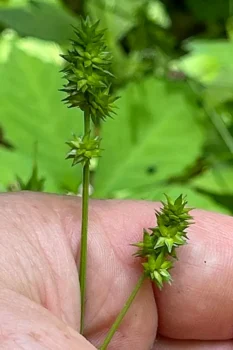
In spring, you’ll notice small, inconspicuous brownish flower spikes that add subtle interest without overwhelming the plant’s gentle character. This sedge is also known by the synonym Carex sparganioides var. cephaloidea, though you’re most likely to find it listed under its primary botanical name.
Where Does It Call Home?
Thinleaf sedge is proudly native to both Canada and the lower 48 states, with a range spanning much of eastern North America. You’ll find it naturally growing from New Brunswick and Ontario down through the northeastern and mid-Atlantic states, and west into the Great Lakes region. Its distribution includes states like Maine, Vermont, New York, Pennsylvania, Ohio, Michigan, Wisconsin, and many others in between.
- Species observed
- No observations
Important note for New Jersey gardeners: Thinleaf sedge has a rarity status of S2 (Highlands Listed) in New Jersey, meaning it’s considered uncommon in the state. If you’re planning to add this plant to your New Jersey garden, please source it responsibly from reputable native plant nurseries rather than wild-collecting.
Why Choose Thinleaf Sedge for Your Garden?
This native sedge offers several compelling reasons to earn a spot in your landscape:
- True native credentials: Supporting local wildlife and ecosystems
- Versatile moisture tolerance: Adapts to both wetland and upland conditions
- Low maintenance: Once established, requires minimal care
- Erosion control: Dense root system helps stabilize soil
- Texture contrast: Fine foliage provides nice contrast to broader-leaved plants
- Deer resistant: Generally avoided by browsing deer
Perfect Spots for Planting
Thinleaf sedge shines in several garden situations:
- Woodland gardens and naturalized areas
- Rain gardens and bioswales
- Shade gardens needing textural interest
- Slopes requiring erosion control
- Native plant communities
Its wetland status varies by region – it can handle both wetland and non-wetland conditions in eastern areas, while preferring slightly drier sites in midwestern and northern regions. This adaptability makes it useful for transition zones between wet and dry areas in your landscape.
Growing Conditions and Care
Thinleaf sedge is refreshingly easy-going about its growing conditions:
- Light: Partial shade to full shade preferred
- Soil: Moist to medium-moist, adapts to various soil types
- Hardiness: USDA zones 3-7
- Water: Regular moisture preferred, but tolerates some drought once established
Planting and Care Tips
Getting thinleaf sedge established in your garden is straightforward:
- Timing: Plant in spring or fall for best establishment
- Spacing: Allow 12-18 inches between plants for natural spreading
- Watering: Keep consistently moist during the first growing season
- Maintenance: Cut back old foliage in late winter if desired, though it’s not necessary
- Fertilizing: Generally unnecessary – this native prefers lean conditions
Wildlife and Ecosystem Benefits
While thinleaf sedge is wind-pollinated and doesn’t directly attract pollinators with showy flowers, it still contributes to your local ecosystem. The dense clumps provide shelter for small wildlife, and the seeds may feed birds. As a native species, it supports the complex web of insects and other creatures that have evolved alongside it.
Is Thinleaf Sedge Right for Your Garden?
Consider thinleaf sedge if you’re looking for a low-key native plant that adds subtle texture without demanding attention. It’s particularly valuable for gardeners wanting to create authentic native plant communities or those dealing with challenging shady, moist areas where other plants struggle.
However, if you’re hoping for bold flowers or dramatic foliage, this might not be your plant – its beauty lies in its quiet, understated presence. Think of it as the garden equivalent of a reliable friend: always there, never flashy, but making everything around it look better.
Remember to source this plant responsibly, especially if you’re gardening in areas where it has rarity status. Your local native plant society or reputable native plant nurseries can help you find ethically sourced plants that will thrive in your specific conditions.