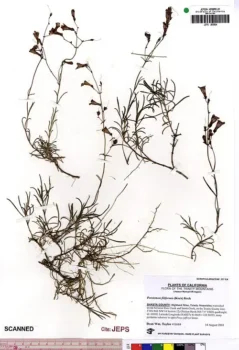
Threadleaf Beardtongue: A Rare California Native Worth Protecting
Meet the threadleaf beardtongue (Penstemon filiformis), a delicate California native that’s as charming as it is challenging to grow. This petite perennial might not be the flashiest plant in the garden center, but for those who appreciate rare alpine beauties, it’s a true gem worth understanding—and protecting.
What Makes Threadleaf Beardtongue Special?
Don’t let the name fool you—while threadleaf might sound a bit technical, it perfectly describes this plant’s most distinctive feature. The leaves are incredibly narrow and thread-like, creating an almost wispy appearance that sets it apart from its more robust Penstemon cousins. As a native forb (that’s garden-speak for a non-woody flowering plant), threadleaf beardtongue produces small tubular flowers in shades of purple to blue that are perfectly sized for visiting hummingbirds and pollinators.
Where Does It Call Home?
This California endemic is a true Golden State original, naturally occurring only within California’s borders, particularly in the Sierra Nevada mountains. Unlike many plants that spread across multiple states, threadleaf beardtongue has chosen to stay local, making it a unique representative of California’s diverse flora.
- Species observed
- No observations
A Conservation Concern
Here’s where things get serious: threadleaf beardtongue has a Global Conservation Status of S3, meaning it’s considered vulnerable. With typically only 21 to 100 occurrences and between 3,000 to 10,000 individual plants in the wild, this isn’t a plant you’ll stumble across on every hiking trail. This rarity status means that while we absolutely encourage growing native plants, it’s crucial to source threadleaf beardtongue only from reputable nurseries that propagate plants responsibly rather than collecting from wild populations.
Garden Role and Design Potential
If you’re thinking of adding threadleaf beardtongue to your landscape, think alpine chic rather than cottage garden abundance. This plant shines in:
- Rock gardens where its delicate texture contrasts beautifully with stone
- Alpine or mountain-themed landscapes
- Xerophytic (drought-tolerant) garden designs
- Native plant collections focusing on California endemics
Its thread-like foliage creates interesting textural contrast against broader-leaved companions, and the small flowers add delicate color without overwhelming nearby plants.
Growing Conditions: Not for Beginners
Let’s be honest—threadleaf beardtongue isn’t the easiest native to grow. This mountain dweller has specific needs that reflect its alpine origins:
- Drainage is everything: Think sandy, rocky, or gravelly soils that drain quickly
- Sun exposure: Full sun is preferred
- Water: Drought tolerant once established, but hates soggy conditions
- Climate: Suited for USDA hardiness zones 5-8, preferring cooler mountain climates
Planting and Care Tips
If you’re determined to grow this rare beauty (and we hope you are, responsibly!), here’s how to give it the best chance:
- Improve drainage by adding coarse sand or small gravel to planting areas
- Plant in spring after the last frost
- Water sparingly—overwatering is more likely to kill it than drought
- Avoid fertilizing; mountain plants prefer lean soils
- Mulch with gravel or small stones rather than organic matter
Wildlife and Pollinator Benefits
Like other Penstemon species, threadleaf beardtongue is a pollinator magnet. Its tubular flowers are perfectly designed for hummingbirds, while bees and butterflies also visit for nectar. By growing this plant, you’re supporting both pollinators and preserving genetic diversity of a vulnerable native species.
The Bottom Line
Threadleaf beardtongue isn’t for every garden or every gardener. It requires specific conditions, careful sourcing, and a commitment to conservation-minded gardening. But for those with the right conditions and a passion for preserving California’s unique flora, it offers the satisfaction of growing something truly special—a plant that represents the irreplaceable diversity of our native landscapes.
Remember: if you can’t provide the specific alpine conditions this plant needs, consider other California native Penstemon species that might be better suited to your garden while still supporting native biodiversity.