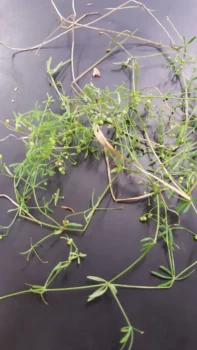
Threepetal Bedstraw: A Delicate Native Ground Cover for Wet Spots
If you’re looking for a charming, low-maintenance ground cover that thrives in those soggy spots where other plants fear to tread, threepetal bedstraw (Galium trifidum trifidum) might just be your new garden hero. This delicate native perennial brings subtle beauty to wet areas while supporting local ecosystems in ways that might surprise you.
Meet Threepetal Bedstraw
Threepetal bedstraw is a petite perennial forb that forms spreading mats of fine, thread-like stems. Despite its common name, this little charmer is also known by its scientific name, Galium trifidum trifidum, and the synonym Galium trifidum L. var. trifidum. As a member of the bedstraw family, it shares the characteristic whorled leaves and tiny flowers that make these plants so distinctive.
Where Does It Call Home?
This hardy native has one of the most impressive ranges you’ll find in North American plants. Threepetal bedstraw naturally occurs from Alaska all the way to Newfoundland, and south through most of the northern United States. You can find it growing wild in states and provinces including Alberta, British Columbia, Alaska, Manitoba, Colorado, Connecticut, Idaho, Maine, Michigan, Minnesota, Montana, and many others across the northern tier of North America.
- Species observed
- No observations
What Makes It Special?
Don’t expect showy blooms from threepetal bedstraw – its beauty lies in subtlety. The tiny white flowers, true to the name, typically have just three petals and appear in small clusters. The real charm comes from the plant’s delicate texture and its ability to form soft, green carpets in areas where few other plants will grow happily.
The plant stays quite low, rarely exceeding a few inches in height, but can spread to form attractive mats. Its fine, linear leaves are arranged in whorls around square stems – a telltale sign of the bedstraw family.
Conservation Considerations
Before you rush out to plant threepetal bedstraw, here’s something important to know: this species has a rarity status of S2 (imperiled) in New Jersey, where it’s listed as Highlands Listed. This means that while it’s not globally rare, it faces challenges in certain regions. If you’re in an area where it’s considered rare, only plant responsibly sourced material from reputable native plant nurseries – never collect from wild populations.
Perfect Garden Situations
Threepetal bedstraw shines in naturalized settings where its subtle beauty can be appreciated up close. Consider it for:
- Woodland gardens with consistently moist soil
- Bog gardens and wetland edges
- Rain gardens where water tends to collect
- Native plant gardens focused on local flora
- Areas near ponds or streams
This isn’t a plant for formal flower borders or high-traffic areas. Instead, think of it as nature’s own carpet for quiet, contemplative spaces.
Growing Conditions and Care
Threepetal bedstraw is refreshingly low-maintenance once you understand its preferences. It thrives in USDA hardiness zones 2-7, making it suitable for most northern gardens.
Soil: Prefers consistently moist to wet soils. It’s quite tolerant of poor drainage – in fact, it prefers it! Clay soils and areas that stay soggy after rain are perfect.
Light: Adaptable to partial shade through full sun, though it seems happiest with some protection from intense afternoon sun.
Water: This is not a drought-tolerant plant. Consistent moisture is key to its success.
Planting and Establishment
Starting threepetal bedstraw is straightforward if you can source plants or seeds from a reputable native plant supplier. Plant in early spring or fall when temperatures are moderate and natural rainfall helps with establishment.
Space plants about 6-12 inches apart if you want quicker coverage, or plant more sparsely and let them spread naturally over time. Once established, the plant will spread on its own through underground stems and self-seeding.
Wildlife and Ecosystem Benefits
While threepetal bedstraw might look unassuming, it plays an important role in supporting local ecosystems. The tiny flowers attract small pollinators like gnats and small flies, which in turn support larger wildlife. The dense mat-forming habit also provides shelter for small insects and helps prevent soil erosion in wet areas.
Maintenance Tips
One of the best things about threepetal bedstraw is how little fuss it requires:
- No fertilizing needed – it’s adapted to naturally nutrient-poor wetland soils
- No regular watering required if planted in appropriately moist locations
- Minimal pruning – just remove any dead material in early spring
- Allow it to self-seed if you want it to spread naturally
Is Threepetal Bedstraw Right for Your Garden?
Choose threepetal bedstraw if you have consistently moist to wet areas that need gentle ground cover, appreciate subtle native plants, and want to support local ecosystems. It’s perfect for gardeners who love the idea of working with nature rather than against it.
Skip it if you’re looking for showy flowers, need drought-tolerant plants, or want something for high-traffic areas. This delicate beauty is best appreciated in quiet, naturalized settings where its understated charm can shine.
Remember, if you’re in an area where threepetal bedstraw is considered rare, you’ll be doing double duty – creating beautiful garden spaces while helping conserve a species that needs our support. Just be sure to source your plants responsibly, and you’ll have a lovely, low-maintenance ground cover that connects your garden to the larger natural world.