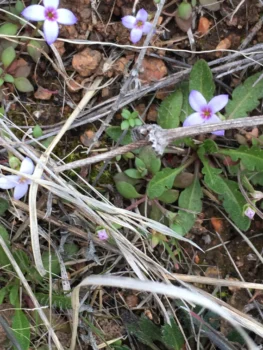
Tiny Bluet: A Delicate Native Ground Cover Worth Discovering
If you’re looking for a charming native ground cover that doesn’t demand attention but quietly adds beauty to your garden, meet the tiny bluet (Houstonia pusilla). This petite annual forb might be small in stature, but it packs a punch when it comes to supporting local ecosystems and adding delicate beauty to specialized garden spaces.
What Makes Tiny Bluet Special?
Tiny bluet is a native annual forb that produces diminutive white to pale blue flowers, each measuring just 2-4mm across. Don’t let the size fool you – these four-petaled blooms create lovely displays when they appear en masse in spring. The plant forms low mats or small clumps, making it perfect for filling in gaps in rock gardens or naturalized areas.
You might also encounter this plant under several botanical synonyms, including Hedyotis minima, Houstonia minima, or Houstonia patens, so don’t be confused if you see these names in older gardening resources.
Where Does Tiny Bluet Call Home?
This native beauty has an impressive range across the United States, naturally occurring in Alabama, Arizona, Arkansas, Delaware, Florida, Georgia, Illinois, Indiana, Iowa, Kansas, Kentucky, Louisiana, Maryland, Mississippi, Missouri, Nebraska, New York, North Carolina, Oklahoma, South Carolina, South Dakota, Tennessee, Texas, and Virginia.
- Species observed
- No observations
Important Conservation Note
Before you rush to add tiny bluet to your garden, there’s something important to know. In New Jersey, this species has a rarity status of Highlands Listed, S2S3, meaning it’s considered uncommon to rare in that region. If you’re planning to grow tiny bluet, please ensure you source seeds or plants from reputable native plant suppliers who practice responsible collection methods. Never collect from wild populations, especially in areas where the plant may be rare.
Why Grow Tiny Bluet in Your Garden?
Here’s why this little native deserves consideration for your landscape:
- Native pollinator support: The small flowers attract native bees, flies, and other tiny pollinators that are often overlooked but crucial for ecosystem health
- Low maintenance: As an annual, it completes its life cycle in one season and may self-seed for future years
- Drought tolerance: Once established, tiny bluet can handle dry conditions well
- Specialized garden appeal: Perfect for rock gardens, native plant collections, or naturalized meadow areas
- Ecosystem support: Provides habitat and food sources for native insects
Growing Conditions and Care
Tiny bluet is surprisingly adaptable across USDA hardiness zones 4-9. Here’s what this little native prefers:
- Soil: Well-drained, sandy, or rocky soils work best
- Sunlight: Full sun to partial shade
- Moisture: Drought tolerant once established; doesn’t like wet feet
- Wetland preference: Generally prefers upland sites, though it can occasionally tolerate some moisture depending on your region
Planting and Care Tips
Growing tiny bluet successfully is refreshingly straightforward:
- When to plant: Direct seed in fall for spring emergence
- Soil prep: Ensure good drainage – this plant doesn’t tolerate soggy conditions
- Ongoing care: Minimal maintenance required once established
- Self-seeding: Allow some plants to go to seed if you want them to naturalize
- Companion planting: Pairs well with other small native forbs and grasses in naturalized settings
Is Tiny Bluet Right for Your Garden?
Consider tiny bluet if you:
- Want to support native pollinators with an authentic native plant
- Have a rock garden or specialized native plant area
- Enjoy subtle, delicate beauty over showy displays
- Prefer low-maintenance plants that don’t require regular watering
- Are creating naturalized meadow or prairie-style plantings
However, tiny bluet might not be the best choice if you’re looking for:
- Bold, colorful displays
- Long-lasting perennial structure
- Ground cover for high-traffic areas
- Plants for consistently moist garden beds
The Bottom Line
Tiny bluet represents the quiet charm of native plants – it won’t steal the show, but it will quietly contribute to your garden’s ecological health while adding delicate spring beauty. Its ease of care and drought tolerance make it a wonderful addition to specialized native gardens, especially for gardeners who appreciate the subtle beauty of our native flora. Just remember to source it responsibly, and you’ll be rewarded with a charming native that supports local wildlife while asking very little in return.