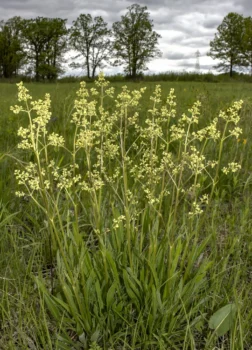
Tobacco Root: A Hardy Native Wildflower for Every Garden
If you’re looking for a low-maintenance native plant that brings both beauty and ecological value to your garden, let me introduce you to tobacco root (Valeriana edulis). Don’t let the name fool you – this charming wildflower has nothing to do with tobacco and everything to do with creating a thriving, wildlife-friendly landscape.
What is Tobacco Root?
Tobacco root is a perennial forb, which is just a fancy way of saying it’s a non-woody flowering plant that comes back year after year. As a member of the valerian family, this hardy native produces clusters of small, fragrant white to pale pink flowers that are absolute magnets for pollinators. The plant gets its common name from its thick, edible root that was traditionally used by Native American tribes – though I’d recommend admiring it rather than harvesting it in your garden!
Where Does Tobacco Root Call Home?
This resilient native plant has quite an impressive range across North America. You’ll find tobacco root naturally growing throughout much of western and central North America, including Canada and the lower 48 states. Specifically, it thrives in British Columbia, Ontario, and across numerous U.S. states including Arizona, Colorado, Idaho, Montana, Nevada, New Mexico, Oregon, Utah, Washington, Wyoming, and several Midwest states like Illinois, Indiana, Iowa, Michigan, Minnesota, Ohio, South Dakota, and Wisconsin.
- Species observed
- No observations
Why You’ll Love Growing Tobacco Root
There are plenty of reasons to fall in love with this unassuming wildflower:
- Pollinator magnet: The fragrant flower clusters attract bees, butterflies, and other beneficial insects
- Low maintenance: Once established, it’s remarkably drought-tolerant and self-sufficient
- Versatile grower: Adapts to various moisture levels and soil conditions
- Native plant benefits: Supports local ecosystems and wildlife
- Long blooming season: Provides flowers throughout much of the growing season
Perfect Garden Settings
Tobacco root is wonderfully adaptable and fits beautifully into several garden styles:
- Native plant and prairie gardens
- Rain gardens and bioswales
- Cottage-style and informal landscapes
- Restoration projects
- Naturalistic borders and edges
Its facultative wetland status means it’s equally happy in moist areas or drier spots, making it incredibly versatile for different garden conditions.
Growing Conditions and Care
One of tobacco root’s best qualities is how easygoing it is about growing conditions. Here’s what this adaptable native prefers:
- Light: Full sun to partial shade
- Soil: Adaptable to various soil types
- Water: Moderate moisture, but tolerates both wet and dry conditions
- Hardiness: Generally hardy in USDA zones 3-8
Planting and Care Tips
Getting tobacco root established in your garden is refreshingly straightforward:
- Starting from seed: Direct sow in fall or early spring for best results
- Watering: Provide occasional watering during dry spells, especially in the first year
- Maintenance: Minimal care needed once established – just sit back and enjoy!
- Spacing: Allow adequate room for the plant to spread and form small colonies
The Bottom Line
Tobacco root might not be the showiest plant in your garden, but it’s definitely one of the most reliable and ecologically valuable. Its combination of pollinator appeal, low maintenance requirements, and native plant benefits makes it a smart choice for gardeners who want to create beautiful, sustainable landscapes. Whether you’re starting a prairie garden, adding to an existing native plant collection, or simply looking for a hardy perennial that gives back to local wildlife, tobacco root deserves a spot in your garden plan.
Ready to welcome this unassuming champion into your landscape? Your local pollinators will definitely thank you for it!