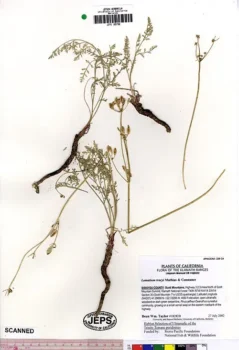
Tracy’s Desertparsley: A Rare Native Gem for Drought-Tolerant Gardens
If you’re looking to add a touch of delicate beauty to your native garden while supporting local ecosystems, Tracy’s desertparsley (Lomatium tracyi) might just be the perfect addition. This charming perennial forb brings subtle elegance and ecological value to drought-tolerant landscapes, though its rarity makes it a special find indeed.
What Makes Tracy’s Desertparsley Special?
Tracy’s desertparsley is a native treasure found only in southwestern Oregon and northwestern California. This herbaceous perennial produces clusters of tiny yellow flowers arranged in delicate umbrella-shaped formations called umbels, typically blooming in spring. The plant’s fernlike foliage adds textural interest throughout the growing season, creating a soft, naturalistic appearance that complements other native species beautifully.
As a member of the carrot family, this plant shares the characteristic umbrella-shaped flower clusters with its relatives, but its refined appearance sets it apart in the garden.
Where Does Tracy’s Desertparsley Grow?
This native species has a limited natural range, growing wild in California and Oregon. Its restricted distribution makes it a truly regional specialty plant.
- Species observed
- No observations
Important Conservation Considerations
Before we dive into growing tips, there’s something important to know: Tracy’s desertparsley has a vulnerable conservation status (S3), meaning it’s at risk in the wild. With only an estimated 21-100 known occurrences and between 3,000-10,000 individual plants in existence, this species deserves our respect and protection.
If you’re interested in growing Tracy’s desertparsley, please ensure you source your plants or seeds from reputable native plant nurseries that use responsibly collected genetic material. Never collect from wild populations.
Why Grow Tracy’s Desertparsley?
Despite its rarity—or perhaps because of it—there are compelling reasons to include this plant in appropriate gardens:
- Pollinator magnet: The small flowers attract native bees, beneficial insects, and butterflies
- Drought tolerance: Once established, it thrives with minimal water
- Native ecosystem support: Helps preserve regional biodiversity
- Low maintenance: Requires little care once properly established
- Unique beauty: Adds delicate texture and spring color to native plantings
Perfect Garden Settings
Tracy’s desertparsley shines in:
- Rock gardens and alpine-style plantings
- Native plant gardens focusing on regional species
- Drought-tolerant landscape borders
- Naturalistic meadow plantings
- Slopes and well-drained areas
Growing Conditions and Care
Success with Tracy’s desertparsley comes from mimicking its natural habitat:
Sunlight: Full sun is essential for healthy growth and flowering.
Soil: Well-draining soil is crucial. This plant cannot tolerate waterlogged conditions and prefers rocky or sandy soils similar to its native habitat.
Water: Once established, Tracy’s desertparsley is quite drought tolerant. Avoid summer irrigation, as excess moisture during dormancy can be harmful.
Climate: Hardy in USDA zones 7-9, making it suitable for mild to moderate climates.
Planting and Establishment Tips
Getting Tracy’s desertparsley established requires patience and attention to its preferences:
- Timing: Plant in fall to allow natural winter chilling and spring emergence
- Spacing: Allow adequate room for the plant to spread naturally
- Mulching: Use gravel or mineral mulch rather than organic mulches that retain moisture
- Watering: Provide moderate water during the first growing season, then reduce significantly
- Fertilization: Generally unnecessary; native soils typically provide adequate nutrition
Is Tracy’s Desertparsley Right for Your Garden?
This native beauty is perfect for gardeners who:
- Want to support rare native species conservation
- Have well-drained, sunny locations
- Appreciate subtle, naturalistic beauty
- Prefer low-maintenance, drought-tolerant plants
- Are creating habitat for native pollinators
However, it might not be the best choice if you have heavy clay soils, prefer lush, tropical-looking plants, or live outside its natural hardiness range.
A Plant Worth Preserving
Tracy’s desertparsley represents the kind of botanical treasure that makes native gardening so rewarding. By growing this rare species responsibly, you’re not just adding beauty to your landscape—you’re participating in conservation efforts and supporting the intricate web of native pollinators and wildlife that depend on regional plant communities.
Remember, the key to success with any rare native plant is patience, respect for its natural requirements, and commitment to sourcing ethically. When grown thoughtfully, Tracy’s desertparsley can be a lasting and meaningful addition to your native garden.