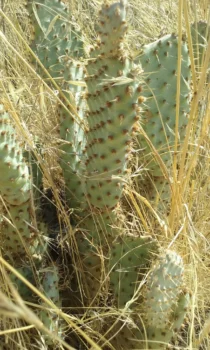
Trelease’s Beavertail Pricklypear: A Rare Desert Jewel Worth Protecting
Meet Trelease’s beavertail pricklypear (Opuntia basilaris var. treleasei), one of California’s most precious and endangered cacti. This remarkable desert dweller isn’t your typical backyard plant – it’s a rare variety that deserves our respect and protection rather than casual cultivation.
What Makes This Cactus Special?
Trelease’s beavertail pricklypear is a perennial shrub that belongs to the iconic pricklypear family. Like other beavertail cacti, it likely features the characteristic flat, paddle-shaped segments that give this group its memorable common name. As a native California species, it has evolved specifically to thrive in the unique conditions of its limited range.
Where Does It Call Home?
This special variety is found exclusively in California, making it a true Golden State endemic. Its distribution is extremely limited, which contributes to its endangered status, particularly in the Bakersfield area where it faces significant conservation challenges.
- Species observed
- No observations
A Conservation Priority
Important Conservation Alert: Trelease’s beavertail pricklypear is listed as Endangered in the United States, specifically in the Bakersfield region. This means the plant is at serious risk of extinction in the wild.
If you’re interested in growing this species, here are the responsible approaches:
- Only obtain plants from verified conservation nurseries or botanical institutions
- Ensure any specimens are propagated from legally and ethically sourced material
- Consider supporting conservation efforts instead of personal cultivation
- Participate in habitat restoration projects in its native range
Better Alternatives for Your Garden
While Trelease’s beavertail pricklypear should be left to conservation professionals, you can still enjoy the beauty of native California cacti in your landscape. Consider these more widely available alternatives:
- Common beavertail pricklypear (Opuntia basilaris) – the parent species
- Other native Opuntia species appropriate for your specific region
- Locally native desert plants that provide similar aesthetic appeal
Supporting Conservation Efforts
The best way to help Trelease’s beavertail pricklypear is to support conservation organizations working to protect California’s native plant communities. Consider donating to botanical gardens, participating in citizen science projects, or volunteering with local native plant societies.
Every rare plant tells a story of unique evolution and ecological relationships. By protecting species like Trelease’s beavertail pricklypear, we preserve irreplaceable pieces of California’s natural heritage for future generations to study and appreciate.
The Bottom Line
While we can’t recommend adding this endangered beauty to your home landscape, we can all play a role in ensuring its survival in the wild. Sometimes the greatest act of gardening love is knowing when to admire from afar and support conservation efforts instead.