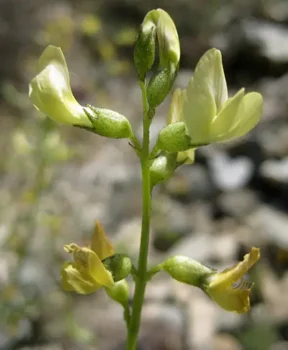
Triplerib Milkvetch: A Critically Endangered California Treasure
Meet the triplerib milkvetch (Astragalus tricarinatus), one of California’s most endangered native plants. This perennial legume is so rare that it’s considered critically imperiled, with fewer than five known populations remaining in the wild. While you might be tempted to add this unique native to your garden, this little plant needs our protection more than our cultivation.
What Makes Triplerib Milkvetch Special
Triplerib milkvetch is a low-growing shrub that rarely exceeds 1.5 feet in height, with most plants staying well under that modest mark. True to its membership in the legume family, this perennial produces the characteristic pea-like flowers that many Astragalus species are known for. Don’t let its small stature fool you – this plant packs significant ecological importance into its compact frame.
Where Does It Call Home?
This California endemic has an extremely limited native range within the Golden State. As a plant species native to the lower 48 states, triplerib milkvetch represents the kind of specialized evolution that makes California’s flora so remarkable – and so vulnerable.
- Species observed
- No observations
The Conservation Reality Check
Here’s where we need to have a serious conversation about rarity. Triplerib milkvetch holds a Global Conservation Status of S1, meaning it’s critically imperiled with typically fewer than 1,000 individuals remaining in the wild. In the United States, it’s classified as Endangered. This isn’t just uncommon – this is hanging by a thread rare.
What does this mean for gardeners? Simply put, this isn’t a plant for your backyard wildflower meadow or native plant border. The few remaining populations need every individual to survive and reproduce in their natural habitat.
Why You Shouldn’t Plant Triplerib Milkvetch (And What to Do Instead)
While we absolutely support growing native plants, triplerib milkvetch falls into a special category of plants that are too rare and specialized for general cultivation. Here’s why:
- Extremely limited wild populations that can’t sustain collection pressure
- Likely has very specific soil and microclimate requirements that are difficult to replicate
- May depend on particular mycorrhizal fungi or other soil organisms not present in typical gardens
- Conservation efforts should focus on protecting existing habitat rather than cultivation
Supporting Conservation Efforts
Instead of trying to grow triplerib milkvetch, consider these meaningful ways to support its conservation:
- Donate to organizations working on California native plant conservation
- Support habitat protection initiatives in California
- Choose other native Astragalus species that aren’t endangered for your garden
- Spread awareness about the importance of protecting rare native plants
Native Alternatives for Your Garden
If you’re drawn to the idea of growing native legumes with similar characteristics, consider these more common California natives:
- Other non-endangered Astragalus species native to your specific region
- Native lupines (Lupinus species)
- Native clovers (Trifolium species)
- Deerweed (Acmispon glaber)
The Bigger Picture
Triplerib milkvetch reminds us that not every native plant is meant for our gardens – and that’s okay! Some plants serve their most important role by surviving in their natural habitats, maintaining genetic diversity and supporting specialized pollinators and wildlife relationships we’re only beginning to understand.
By choosing abundant native plants for our gardens and supporting conservation of rare species like triplerib milkvetch in their natural homes, we can create a world where both cultivated and wild native plants thrive. Sometimes the most loving thing we can do for a plant is to admire it from afar and work to protect the places it calls home.