Tubercle Dodder: A Fascinating but Problematic Native Parasite
Meet tubercle dodder (Cuscuta tuberculata), one of nature’s more unusual characters that you definitely don’t want to invite into your garden party. This native perennial might sound intriguing, but it’s the botanical equivalent of that houseguest who never leaves and eats all your food.
What Exactly Is Tubercle Dodder?
Tubercle dodder is a parasitic forb herb native to the southwestern United States. Unlike your typical garden plants that politely make their own food through photosynthesis, this sneaky species has given up that responsibility entirely. Instead, it wraps its thin, orange to yellow thread-like stems around unsuspecting host plants and basically moves in permanently, stealing nutrients and water for survival.
Where You’ll Find It Growing Wild
This native species calls Arizona and New Mexico home, thriving in desert scrub and semi-arid grasslands where it can find suitable host plants to, well, mooch off of. It’s perfectly adapted to the harsh conditions of the American Southwest, though not in the way most plants manage it.
- Species observed
- No observations
Why You Shouldn’t Plant Tubercle Dodder
Here’s where we need to have a serious conversation. While tubercle dodder is undeniably fascinating from a botanical perspective, there are several compelling reasons to admire it from afar rather than bringing it home:
- It’s a plant vampire: As a parasitic species, it will attach to and potentially harm or kill your other garden plants
- Conservation concerns: With a Global Conservation Status of S3S4, this species has some rarity issues and should be left undisturbed in its natural habitat
- Impossible to cultivate traditionally: You literally cannot grow it without providing living host plants for it to parasitize
- Unpredictable spread: Once established, it can quickly spread to neighboring plants, potentially damaging your entire garden
What It Looks Like
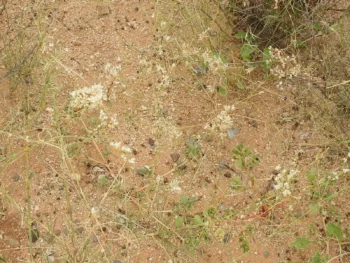
If you’re hiking in the Southwest and want to spot this botanical oddball in the wild, look for thin, stringy orange to yellow stems that seem to be strangling other plants. During blooming season, you’ll notice small clusters of tiny white to pinkish flowers. The whole plant has an unmistakable tangled, web-like appearance that makes it look like nature’s version of silly string gone rogue.
Its Role in Natural Ecosystems
Despite its troublesome reputation in gardens, tubercle dodder does play a legitimate role in its native desert ecosystems. The small flowers can provide nectar for tiny insects, and it’s part of the complex web of relationships that make desert communities function. Some wildlife may even use the dense tangles for nesting material.
Better Alternatives for Your Southwest Garden
If you’re gardening in Arizona or New Mexico and want to support native plants, consider these well-behaved alternatives instead:
- Desert marigold for cheerful yellow blooms
- Penstemon species for stunning flower spikes
- Desert willow for graceful beauty
- Brittlebush for reliable color and pollinator support
The Bottom Line
Tubercle dodder is absolutely fascinating as a wild plant, and it deserves our respect as a native species with conservation concerns. However, it’s definitely not garden material. Think of it as nature’s reminder that not every plant is meant for cultivation – sometimes the best way to appreciate a species is to leave it exactly where it belongs, thriving in its natural desert home.
If you encounter tubercle dodder in the wild, take a moment to marvel at this evolutionary oddball, snap a photo if you’d like, but please leave it undisturbed for future generations to discover and wonder at.