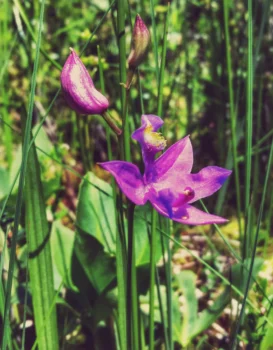
Tuberous Grasspink: A Rare Native Orchid Worth Protecting
If you’ve ever stumbled across a magenta-pink flower that looks like it’s blooming upside-down in a wetland, you might have discovered one of North America’s most enchanting native orchids: the tuberous grasspink. This remarkable wildflower is a true gem of our native flora, though one that’s becoming increasingly rare in many areas.
What Makes Tuberous Grasspink Special?
Tuberous grasspink (Calopogon tuberosus var. tuberosus) is a perennial orchid that defies expectations. Unlike most orchids we’re familiar with, this beauty presents its flowers in what appears to be an upside-down orientation, with the colorful lip pointing upward instead of down. The vibrant magenta-pink blooms emerge from slender, grass-like foliage, creating a striking contrast against wetland backdrops.
This native forb lacks the woody stems of shrubs and trees, instead growing as a herbaceous perennial that dies back to underground tubers each winter. During its growing season, it typically reaches 1-3 feet in height, making it a modest but eye-catching presence in its natural habitat.
Where Does Tuberous Grasspink Grow?
This remarkable orchid is native to a vast range across North America, naturally occurring in states from Maine to Florida and west to Minnesota and Texas. You’ll also find it in several Canadian provinces including Ontario, Quebec, and the Maritime provinces. Despite this wide historical range, tuberous grasspink has become increasingly uncommon throughout much of its territory.
- Species observed
- No observations
A Plant in Peril
Here’s where the story takes a concerning turn: tuberous grasspink is considered critically imperiled (S1 status) in Arkansas, meaning it faces a very high risk of disappearing from the state entirely. This rarity status reflects broader population declines across its range, primarily due to habitat loss and wetland destruction.
The decline of this species highlights the critical importance of wetland conservation. As bogs, fens, and wet meadows continue to face development pressure and environmental changes, specialized plants like tuberous grasspink lose the very specific conditions they need to survive.
Why This Orchid Is Tricky for Home Gardens
While it’s natural to want to grow such a beautiful native plant, tuberous grasspink presents significant challenges for home gardeners:
- Requires very specific wet, acidic, nutrient-poor soil conditions that are difficult to replicate
- Depends on complex mycorrhizal relationships with soil fungi
- Needs consistent moisture levels that mimic natural wetland conditions
- Thrives in USDA hardiness zones 3-9 but only under precise environmental conditions
- Extremely difficult to establish from seed or transplant
These requirements make tuberous grasspink better suited for appreciation in its natural habitat rather than cultivation in typical garden settings.
Ecological Importance and Pollinator Benefits
In the wild, tuberous grasspink plays a valuable role in wetland ecosystems. The flowers attract various native pollinators, including specialized bees that have co-evolved with native orchids. The plant’s presence often indicates a healthy, intact wetland ecosystem.
The unique flower structure isn’t just for show—it’s specifically adapted to ensure effective pollination through a fascinating bit of botanical trickery that attracts and temporarily traps visiting insects.
How You Can Help Protect This Species
Rather than attempting to grow tuberous grasspink in your garden, consider these more effective ways to support this rare orchid:
- Support wetland conservation organizations
- Visit and appreciate the species in its natural habitat
- Create pollinator-friendly gardens with other native wetland plants
- Advocate for the protection of local bogs, fens, and wet meadows
- Choose alternative native plants that provide similar ecological benefits
Native Alternatives for Your Garden
If you’re drawn to the beauty of native orchids but want something more garden-friendly, consider these alternatives that offer similar appeal while being more adaptable to cultivation:
- Wild bergamot for purple-pink blooms that attract pollinators
- Native iris species for wetland gardens
- Swamp milkweed for wet areas and monarch butterfly support
- Blue flag iris for similar wetland habitat preferences
The Bottom Line
Tuberous grasspink represents the wild beauty and ecological complexity of North America’s native wetlands. While it may not be suitable for most home gardens, this remarkable orchid deserves our respect, protection, and admiration in its natural setting. By supporting wetland conservation and choosing appropriate native plants for our own gardens, we can help ensure that future generations will have the opportunity to encounter this botanical treasure in the wild.
Sometimes the best way to love a plant is to let it flourish where it belongs—in the irreplaceable ecosystems it calls home.