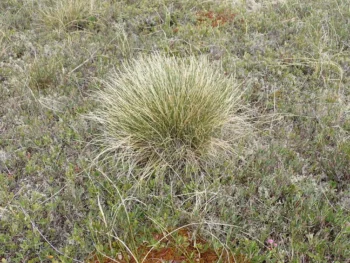
Tufted Bulrush: A Hardy Wetland Native for Specialized Gardens
If you’re looking to create an authentic wetland garden or restore a boggy area on your property, tufted bulrush (Trichophorum cespitosum) might just be the unsung hero you need. This modest sedge won’t win any beauty contests, but what it lacks in flashy flowers, it makes up for in resilience and ecological value.
What Is Tufted Bulrush?
Tufted bulrush is a perennial sedge that forms dense, grass-like clumps in wetland areas. Don’t let the name fool you – despite being called a bulrush, this plant is actually a member of the sedge family. It’s one of those quiet, hardworking plants that prefers to blend into the background while doing important environmental work.
This hardy perennial grows to about 1.3 feet tall with narrow green foliage and produces small, inconspicuous yellowish flowers in early summer. The plant has a rhizomatous growth form, meaning it spreads slowly underground to form larger colonies over time.
Where Does It Come From?
Tufted bulrush boasts an impressive native range that spans much of northern North America. You’ll find this adaptable sedge naturally occurring from Alaska and northern Canada all the way down to states like Colorado, Michigan, and even parts of the southeastern United States including Georgia and the Carolinas. It’s also native to Greenland and parts of northern Europe and Asia.
- Species observed
- No observations
The plant grows across an remarkable variety of provinces and states, including Alberta, British Columbia, Alaska, Manitoba, Ontario, Quebec, Colorado, Idaho, Maine, Michigan, Minnesota, Montana, New Hampshire, Vermont, Washington, Wisconsin, and many others.
Why Would You Want to Grow Tufted Bulrush?
Let’s be honest – tufted bulrush isn’t going to be the star of your Instagram garden photos. But here’s why you might want to consider it:
- Wetland specialist: This plant thrives in conditions that would kill most other garden plants. It’s classified as an Obligate Wetland species, meaning it almost always occurs in wet areas.
- Extremely hardy: It can tolerate temperatures as low as -43°F, making it perfect for harsh northern climates.
- Low maintenance: Once established in the right conditions, it requires minimal care.
- Erosion control: The dense root system helps stabilize wet soils.
- Habitat value: Provides structure and cover for wetland wildlife.
Why You Might Not Want It
Tufted bulrush isn’t for everyone, and here’s why:
- Very specific needs: It requires consistently wet to boggy conditions – not just moist soil.
- Limited availability: There’s no known commercial source for this plant, so you’d need to propagate it yourself or source it through specialized native plant sales.
- Modest appearance: If you’re looking for showy flowers or dramatic foliage, this isn’t your plant.
- Slow to establish: Seeds have low vigor and the plant has a slow growth rate initially.
Perfect Garden Situations
Tufted bulrush shines in specific garden scenarios:
- Wetland restoration projects
- Bog gardens
- Rain gardens with poor drainage
- Naturalistic pond edges
- Areas with seasonal flooding
- Native plant collections focusing on wetland species
Growing Conditions and Care
Success with tufted bulrush is all about getting the conditions right:
Soil: Prefers fine to medium-textured soils that stay consistently wet. It can handle acidic conditions (pH 4.5-6.5) and has low fertility requirements.
Water: This is non-negotiable – the soil must stay wet year-round. Think bog conditions rather than just moist garden soil.
Light: Tolerates partial shade but grows best with some direct sunlight.
Temperature: Extremely cold hardy (USDA zones 2-7) and requires at least 80 frost-free days.
Spacing: Plant 1,700-4,800 plants per acre for restoration projects, or space individual plants about 1-2 feet apart for garden use.
Propagation and Planting
Getting started with tufted bulrush can be challenging due to limited availability:
- Seeds: Can be propagated from seed, but expect low germination rates and slow initial growth.
- Division: Established clumps can be divided in spring.
- Sprigs: Small pieces of rhizome can be planted directly.
The best time to plant is in spring when soil is workable but still wet from snowmelt or spring rains.
The Bottom Line
Tufted bulrush is definitely a specialist plant for specialized situations. If you have a wet area that needs stabilizing, want to create authentic wetland habitat, or are working on an ecological restoration project, this tough little sedge could be exactly what you need. However, if you’re looking for easy-care perennials for a typical garden bed, you’ll want to look elsewhere.
For most gardeners, tufted bulrush represents the fascinating diversity of native plants that exist beyond the usual suspects. While it may not have the broad appeal of purple coneflower or black-eyed Susan, it serves a crucial role in its specialized wetland niche – and sometimes that’s exactly what your landscape needs.