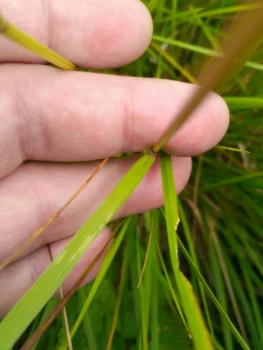
Tufted Hairgrass: A Graceful Native Grass for Challenging Sites
If you’re looking for a resilient native grass that can handle wet feet and cold winters while adding delicate beauty to your landscape, tufted hairgrass (Deschampsia cespitosa) might be your new best friend. This perennial grass has been quietly gracing North American landscapes for millennia, and it’s about time more gardeners discovered its charms.
What is Tufted Hairgrass?
Tufted hairgrass is a clump-forming perennial grass native to a remarkably wide range across North America, from Alaska and northern Canada all the way down to states like California, Colorado, and even North Carolina. This cold-hardy grass typically grows to about 3.4 feet tall and forms dense, attractive tufts that give it its common name.
In summer, tufted hairgrass produces delicate, airy flower panicles in yellow tones that dance gracefully in the breeze. While the flowers aren’t particularly showy, they add a subtle elegance that’s hard to replicate with other plants. The medium-textured green foliage provides good structure through the growing season.
Where Does Tufted hairgrass Grow?
This adaptable grass has an impressive native range spanning across Alaska, most Canadian provinces, and numerous U.S. states including Alberta, British Columbia, Manitoba, Arizona, California, Colorado, Connecticut, Idaho, Illinois, Indiana, Kentucky, Maine, Maryland, Massachusetts, Michigan, Minnesota, Montana, Nevada, New Hampshire, New Jersey, New Mexico, New York, North Carolina, North Dakota, Ohio, Oregon, Pennsylvania, Rhode Island, South Dakota, Utah, Vermont, Virginia, Washington, West Virginia, Wisconsin, and Wyoming.
- Species observed
- No observations
A Note About Conservation
Before you rush out to plant tufted hairgrass everywhere, there’s something important to know: this species has a global conservation status that suggests some populations may be at risk. In New Jersey, it’s listed as S3, meaning it’s somewhat rare in the state. If you’re interested in growing this beautiful grass, please source your plants or seeds from reputable native plant nurseries that use responsibly collected material rather than harvesting from wild populations.
Why Grow Tufted Hairgrass?
There are several compelling reasons to consider adding tufted hairgrass to your landscape:
- Moisture tolerance: This grass thrives in wet conditions where many other plants struggle
- Cold hardiness: Extremely cold tolerant (down to -38°F), perfect for northern gardens
- Low maintenance: Once established, it requires minimal care
- Natural movement: The delicate flower heads create beautiful movement and sound in breezes
- Native wildlife habitat: Provides structure and potential nesting material for small wildlife
- Soil adaptability: Tolerates coarse, medium, and fine-textured soils
Perfect Garden Situations
Tufted hairgrass shines in several landscape scenarios:
- Rain gardens: Its high tolerance for wet conditions makes it ideal for managing stormwater
- Naturalistic plantings: Perfect for prairie restorations and meadow gardens
- Challenging wet spots: That soggy area where nothing else wants to grow
- Woodland edges: Provides a nice transition between woods and open areas
- Accent plantings: Adds texture and movement to perennial borders
Growing Conditions and Care
Tufted hairgrass is refreshingly undemanding once you understand its preferences:
Hardiness: Zones 2-7, making it suitable for even the coldest gardens
Soil requirements: Adaptable to various soil types but prefers medium fertility. It tolerates pH ranges from 4.8 to 7.2, so most garden soils will work fine.
Moisture needs: This is where tufted hairgrass really shines. It has high tolerance for wet, even waterlogged conditions, but surprisingly low drought tolerance. Keep it consistently moist for best results.
Light requirements: Prefers full sun but can’t tolerate much shade
Maintenance: Cut back the old foliage in late winter before new growth begins. The clumps can be divided every 3-4 years if desired, though it’s not necessary.
Planting Tips
Getting tufted hairgrass established is straightforward:
- Plant in spring after the last frost
- Space plants about 2-3 feet apart to allow for mature size
- Water regularly during the first growing season
- Mulch around plants to retain moisture
- Be patient – this grass has a moderate growth rate and may take a season or two to reach full size
Propagation
Tufted hairgrass is typically grown from seed, which is readily available from native plant suppliers. The seeds are quite small (over 1.3 million per pound!), so a little goes a long way. Seeds can be sown in fall or spring, and germination is usually reliable with medium seedling vigor.
Wildlife Benefits
While tufted hairgrass is wind-pollinated and doesn’t attract pollinators like wildflowers do, it provides valuable wildlife habitat. The dense clumps offer shelter for small mammals and ground-nesting birds, and the seeds provide food for various bird species in fall and winter.
The Bottom Line
Tufted hairgrass is an excellent choice for gardeners dealing with wet, challenging sites where other plants struggle. Its graceful form, low maintenance requirements, and impressive cold tolerance make it a valuable addition to naturalistic landscapes. Just remember to source it responsibly given its conservation status, and you’ll have a beautiful, long-lived grass that connects your garden to the wider North American landscape. Plus, there’s something deeply satisfying about growing a plant that’s been thriving in these same regions since long before any of us were around to appreciate it!