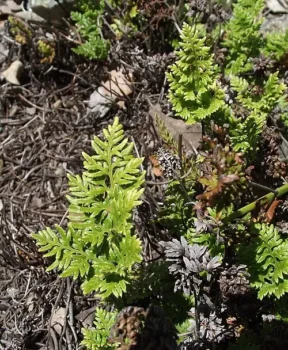
Tufted Lacefern: A Rare California Native Worth Protecting
Meet the tufted lacefern (Aspidotis carlottahalliae), one of California’s most delicate and elusive native ferns. This charming little plant might not be the showiest member of the fern family, but what it lacks in size, it makes up for in character and conservation importance.
What Makes Tufted Lacefern Special?
The tufted lacefern is a petite perennial that forms neat, compact clumps of finely divided fronds. True to its name, the fronds have an intricate, lace-like appearance that adds delicate texture to any garden space. Don’t expect a towering specimen – this little beauty stays relatively small and tidy, making it perfect for intimate garden spaces.
You might also encounter this fern listed under its scientific synonym, Cheilanthes carlotta-halliae, in older botanical references, but Aspidotis carlottahalliae is the current accepted name.
Where Does It Call Home?
This fern is a true California native, found exclusively within the Golden State’s diverse landscapes. It’s naturally adapted to the unique conditions of California’s rocky terrains, particularly in mountainous and coastal regions.
- Species observed
- No observations
A Word of Caution: Rarity Matters
Here’s something important every gardener should know: the tufted lacefern has a Global Conservation Status of S3, meaning it’s considered vulnerable. With typically only 21 to 100 occurrences found in the wild and between 3,000 and 10,000 individual plants, this species faces real conservation challenges.
What does this mean for you as a gardener? If you’re lucky enough to find tufted lacefern available for purchase, make absolutely sure it comes from a reputable nursery that propagates their plants responsibly rather than collecting from wild populations. Never collect this fern from its natural habitat.
Garden Benefits and Design Role
When grown responsibly, tufted lacefern can be a wonderful addition to specialized garden settings:
- Rock gardens and crevice plantings
- Native plant gardens focused on California flora
- Alpine or xerophytic landscape designs
- Naturalistic plantings that mimic California’s native ecosystems
While ferns don’t produce flowers to attract pollinators, they do contribute to garden ecosystems in other ways, providing habitat structure and contributing to the overall biodiversity of native plantings.
Growing Conditions and Care
If you do manage to source tufted lacefern responsibly, here’s what it needs to thrive:
Sunlight: Partial shade to filtered sunlight works best. Too much direct sun can stress this delicate fern.
Soil: Excellent drainage is absolutely critical. Think rocky, well-draining soil that mimics its natural mountain habitat.
Water: Once established, this fern is quite drought-tolerant. Avoid overwatering, which can lead to root rot.
Climate: Best suited for USDA hardiness zones 8-10, matching California’s Mediterranean climate patterns.
The Bottom Line
The tufted lacefern is a fascinating piece of California’s natural heritage, but its vulnerable status means it’s not a plant for every garden. If you’re passionate about native plant conservation and can source it responsibly, it can be a meaningful addition to specialized rock or native gardens. However, for most gardeners, supporting conservation efforts and appreciating this rare fern in its natural habitat might be the most responsible choice.
Consider exploring other California native ferns that are more readily available and less conservation-sensitive for your garden projects. Your local native plant society can point you toward beautiful alternatives that will give you that delicate fern aesthetic without the conservation concerns.