Tufted Twinpod: Wyoming’s Rare Alpine Treasure
Meet the tufted twinpod (Physaria condensata), a charming little perennial that’s as rare as it is beautiful. This diminutive native wildflower might not be the showiest plant in your garden, but for those who appreciate subtle alpine beauty and want to support native plant conservation, it’s a true gem worth considering.
What Makes Tufted Twinpod Special?
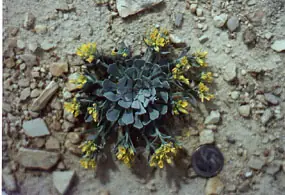
Tufted twinpod is a low-growing forb that forms neat, cushion-like mounds of silvery-green foliage. In early spring, it produces clusters of small, bright yellow flowers that seem to glow against its pale leaves. The plant gets its common name from its distinctive seed pods, which split into two parts—hence twinpod.
As a perennial herb, this plant lacks woody stems but returns year after year, slowly spreading to form attractive ground-covering mats that rarely exceed 6 inches in height.
Where Does It Call Home?
This little beauty is a true Wyoming endemic, meaning it’s found naturally nowhere else in the world. Tufted twinpod grows exclusively in Wyoming, particularly around the South Pass area and surrounding high-elevation regions.
- Species observed
- No observations
A Word About Rarity
Important conservation note: Tufted twinpod has a Global Conservation Status of S2S3, indicating it’s quite rare in the wild. If you’re interested in growing this plant, please only source it from reputable native plant nurseries that propagate from ethically collected seed—never dig plants from the wild or purchase from questionable sources.
Why Grow Tufted Twinpod?
Here are some compelling reasons to consider this rare native:
- Conservation impact: Growing rare natives helps preserve genetic diversity and supports conservation efforts
- Pollinator support: Early spring blooms provide nectar for native bees and other small pollinators when few other flowers are available
- Unique beauty: The silvery foliage and bright yellow flowers create an eye-catching contrast
- Low maintenance: Once established, it’s drought tolerant and requires minimal care
- Conversation starter: Few gardeners grow truly rare plants—you’ll have a unique story to tell
Perfect Garden Spots
Tufted twinpod isn’t for every garden, but it shines in these settings:
- Rock gardens with excellent drainage
- Alpine or mountain-themed landscapes
- Native plant collections
- Xeriscaped areas
- Raised beds with sandy or gravelly soil
Growing Conditions and Care
This mountain native has specific needs that mirror its natural habitat:
Sunlight: Full sun is essential—at least 6-8 hours of direct sunlight daily
Soil: Well-draining, rocky, or sandy soil is crucial. Heavy clay or water-retentive soils will likely kill the plant. Consider adding gravel or sand to improve drainage.
Water: Drought tolerant once established, but benefits from occasional deep watering during extremely dry periods. Avoid overwatering at all costs.
Climate: Hardy in USDA zones 4-7, perfect for gardens with cold winters and dry summers
Planting and Care Tips
- Spring planting: Plant in late spring after the last frost
- Soil preparation: Amend heavy soils with coarse sand, gravel, or pumice
- Spacing: Allow 12-18 inches between plants
- Mulch: Use gravel mulch rather than organic mulch to prevent moisture retention
- Fertilizer: None needed—rich soils can actually harm the plant
- Winter care: No special protection needed in appropriate zones
The Bottom Line
Tufted twinpod isn’t for every gardener or every garden. It requires specific conditions and can be challenging to establish. However, for those committed to native plant conservation and alpine gardening, it offers the unique opportunity to grow one of Wyoming’s rarest botanical treasures.
If you decide to grow tufted twinpod, remember that you’re not just adding a plant to your garden—you’re participating in conservation efforts for a truly special native species. Just make sure to source it responsibly and provide the excellent drainage it absolutely requires to thrive.