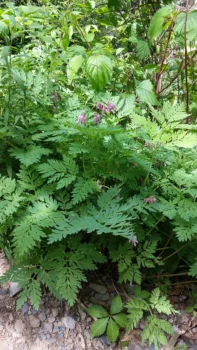
Turkey Corn: A Delicate Native Beauty for Your Shade Garden
If you’re looking for a charming native plant that brings delicate beauty to shady spots, turkey corn (Dicentra eximia) might be just the ticket. This lovely perennial forb has been gracing eastern North American woodlands for centuries, and it’s ready to work its magic in your garden too.
What Makes Turkey Corn Special?
Turkey corn is one of those plants that seems almost too delicate to be real. Its heart-shaped pink flowers dangle gracefully from arching stems like tiny romantic pendants, blooming from late spring through early fall. The deeply cut, blue-green foliage has an almost ferny appearance that adds texture and interest even when the plant isn’t flowering.
This native beauty belongs to the bleeding heart family and goes by the botanical name Dicentra eximia. You might also see it listed under its synonym Bicuculla eximia in older references.
Where Turkey Corn Calls Home
As a true native of the eastern United States, turkey corn naturally occurs across 15 states, from Georgia up through New England and west to Illinois and Michigan. You’ll find it thriving in the wild throughout much of the Appalachian region, including:
- Georgia, North Carolina, South Carolina, Tennessee
- Virginia, West Virginia, Maryland, Pennsylvania
- New York, New Jersey, Vermont, Massachusetts
- Ohio, Michigan, Illinois
- Species observed
- No observations
A Word About Rarity
Here’s something important to know: turkey corn is considered endangered in New Jersey, where it has special protection status. If you’re planning to add this beauty to your garden, please make sure you’re purchasing from reputable nurseries that sell responsibly propagated plants rather than wild-collected specimens.
Perfect Spots for Turkey Corn in Your Garden
Turkey corn is a shade-lover’s dream plant. It’s perfectly suited for:
- Woodland gardens where it can naturalize under trees
- Shaded rock gardens where its delicate form creates lovely contrast
- Native plant gardens focused on regional flora
- Groundcover in partially shaded areas
- Cottage gardens with a natural, informal feel
This perennial forb typically grows 8-18 inches tall and spreads slowly to form small colonies, making it an excellent choice for filling in those tricky shaded spots where grass struggles.
Growing Turkey Corn Successfully
The good news is that turkey corn is surprisingly easy to grow once you understand its preferences. Think woodland floor and you’ll be on the right track.
Light and Location
Turkey corn thrives in partial to full shade. Morning sun with afternoon shade works well, but avoid hot, sunny locations where the delicate foliage might scorch.
Soil Requirements
This plant prefers moist but well-draining soil that’s rich in organic matter. Think leaf mold and compost – the kind of rich, woodsy soil you’d find on a forest floor. While it likes consistent moisture, it won’t tolerate soggy conditions.
Climate Considerations
Turkey corn is quite adaptable, thriving in USDA hardiness zones 3-9. This makes it suitable for most temperate gardens across its native range and beyond.
Planting and Care Tips
When to Plant
Spring is the ideal time to plant turkey corn. This gives the roots time to establish before winter.
Ongoing Care
- Mulch around plants to help retain moisture and suppress weeds
- Water during dry spells, especially in the first year
- Deadhead spent flowers to encourage continued blooming
- Allow foliage to remain until it naturally dies back in fall
- Once established, turkey corn is surprisingly drought tolerant
Wildlife and Pollinator Benefits
Here’s where turkey corn really shines from an ecological perspective. Those charming heart-shaped flowers aren’t just pretty – they’re pollinator magnets. Hummingbirds absolutely love them, and you’ll often see these tiny aerial acrobats hovering around the blooms. Long-tongued bees also visit the flowers for nectar, making turkey corn a valuable addition to any pollinator-friendly garden.
Should You Plant Turkey Corn?
If you have a shaded garden and want to support native wildlife while adding delicate beauty to your landscape, turkey corn is an excellent choice. It’s well-behaved (not invasive), supports pollinators, and brings months of subtle charm to areas where many other plants struggle.
Just remember to source your plants responsibly, especially given its endangered status in some areas. Look for nurseries that specialize in native plants and clearly state their propagation methods.
With its combination of delicate beauty, ecological value, and easy care requirements, turkey corn proves that native plants can be both gorgeous and garden-worthy. Your hummingbirds will thank you!