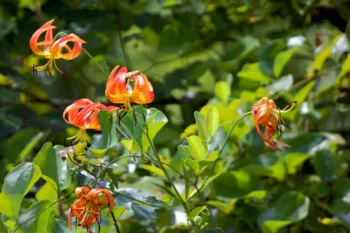
Turk’s-Cap Lily: A Stunning Native Beauty for Your Garden
If you’re looking for a show-stopping native plant that’ll make your neighbors do a double-take, let me introduce you to the turk’s-cap lily (Lilium superbum). This spectacular perennial is like nature’s own fireworks display – tall, dramatic, and absolutely gorgeous when it bursts into bloom.
What Makes Turk’s-Cap Lily Special?
The turk’s-cap lily gets its quirky name from its distinctive flowers that look like tiny orange turbans. The petals curve backward so dramatically, they almost seem to be doing yoga poses! These nodding, spotted orange blooms cluster at the top of stems that can tower anywhere from 3 to 8 feet tall, making this plant a real garden showstopper.
As a native perennial forb, this lily brings authentic regional character to your landscape. It’s been gracing North American woodlands and meadows for centuries, so you know it’s perfectly adapted to our growing conditions.
Where Does It Grow Naturally?
Turk’s-cap lily is native to the eastern United States, naturally occurring across 24 states from the Northeast down to the Gulf Coast and stretching west into the Midwest. You’ll find it growing wild from New Hampshire to Florida, and from the Atlantic coast all the way to Illinois and Arkansas.
- Species observed
- No observations
A Word About Rarity
Important note for gardeners: This beautiful lily is considered rare in some areas, particularly in Alabama (S2 status) and Arkansas (S1 status). If you’re lucky enough to garden in these regions, definitely consider adding turk’s-cap lily to your landscape – but please make sure you source your bulbs responsibly from reputable native plant nurseries, never from wild populations.
Perfect Spots in Your Garden
Turk’s-cap lily is incredibly versatile and fits beautifully into several garden styles:
- Rain gardens and bioswales (it loves moisture!)
- Woodland gardens and shaded borders
- Native plant gardens
- Cottage-style gardens
- Pollinator gardens
- Naturalized meadow areas
Its towering height makes it perfect for the back of borders, where it can provide a stunning backdrop for shorter plants. The dramatic vertical accent it provides is hard to beat!
Pollinator Magnet
Here’s where turk’s-cap lily really shines – it’s an absolute pollinator paradise! Those large, nectar-rich orange blooms are like a five-star restaurant for:
- Butterflies (especially the magnificent swallowtails)
- Hummingbirds
- Various native bee species
If you want to support local wildlife while adding stunning beauty to your garden, this lily delivers on both fronts.
Growing Conditions
One of the things I love most about turk’s-cap lily is its preference for moist conditions. While many lilies can be fussy about drainage, this one actually thrives in consistently moist soil – making it perfect for those slightly soggy spots in your yard that challenge other plants.
Here’s what it needs to thrive:
- Soil: Moist, well-draining, slightly acidic soil
- Light: Partial shade to full sun (though it appreciates some afternoon shade in hot climates)
- Moisture: Consistent moisture throughout the growing season
- Hardiness: USDA zones 3-9
Its wetland status as Facultative Wetland across all regions means it’s equally happy in wetland conditions or regular garden soil, as long as you keep it adequately watered.
Planting and Care Tips
Growing turk’s-cap lily successfully is easier than you might think:
- When to plant: Plant bulbs in fall for best results
- Planting depth: Plant bulbs about three times their height deep
- Spacing: Give them room to spread – about 12-18 inches apart
- Mulching: Apply a good layer of organic mulch to retain moisture and protect the bulbs
- Watering: Keep consistently moist, especially during the growing season
- After blooming: Let the foliage die back naturally – those leaves are feeding next year’s show!
- Division: Divide clumps every 3-4 years to maintain vigor and create new plants
Why You’ll Love Growing Turk’s-Cap Lily
This native beauty offers everything a gardener could want: stunning visual impact, easy care, pollinator appeal, and authentic regional character. Its tolerance for moist conditions makes it perfect for challenging spots where other plants might struggle, and its impressive height adds dramatic vertical interest to any planting scheme.
Plus, there’s something deeply satisfying about growing a plant that’s been thriving in your region for centuries. You’re not just adding beauty to your garden – you’re participating in your area’s natural heritage and supporting local ecosystems.
So if you’re ready to add some native drama to your landscape, consider giving turk’s-cap lily a try. Just remember to source responsibly, especially if you’re in areas where it’s rare, and get ready to enjoy one of North America’s most spectacular native lilies!