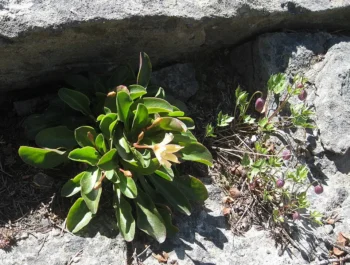
Tweedy’s Pussypaws: A Rare Pacific Northwest Gem Worth Growing Responsibly
With a name that’s sure to make you smile, Tweedy’s pussypaws (Cistanthe tweedyi) is one of the Pacific Northwest’s most charming native wildflowers. This petite perennial might be small in stature, but it packs a big punch when it comes to both beauty and ecological value. However, before you rush to add this lovely plant to your garden, there’s something important you need to know about its conservation status.
What Makes Tweedy’s Pussypaws Special
Tweedy’s pussypaws is a delightful herbaceous perennial that forms low rosettes of succulent-like leaves topped with clusters of pink to white flowers. The blooms have a soft, fuzzy appearance that gives the plant its endearing common name. As a member of the purslane family, this hardy little forb has adapted beautifully to the challenging conditions of its mountain habitat.
Where You’ll Find This Pacific Northwest Native
This charming wildflower calls the Pacific Northwest home, with its natural range limited to Washington State and British Columbia. You’ll find it growing wild in rocky, mountainous areas where it has adapted to harsh alpine conditions.
- Species observed
- No observations
Important Conservation Considerations
Here’s where things get serious: Tweedy’s pussypaws has a Global Conservation Status of S3, meaning it’s considered vulnerable. With only 21 to 100 known occurrences and an estimated 3,000 to 10,000 individual plants in the wild, this species faces real conservation challenges. If you’re interested in growing this beautiful native, it’s absolutely crucial that you source it responsibly from reputable native plant nurseries that propagate their own stock rather than collecting from wild populations.
Why Gardeners Love This Little Beauty
Despite its rarity, Tweedy’s pussypaws offers several compelling reasons to include it in the right garden setting:
- Stunning pink to white flower clusters that bloom in late spring to early summer
- Compact, low-growing habit perfect for rock gardens and alpine settings
- Exceptional drought tolerance once established
- Attracts beneficial pollinators including native bees and butterflies
- Authentic Pacific Northwest heritage for regional native plant gardens
Perfect Garden Settings
Tweedy’s pussypaws isn’t a plant for every garden, but it absolutely shines in the right conditions. This alpine beauty is tailor-made for:
- Rock gardens where it can nestle between stones
- Alpine and mountain-themed landscapes
- Xeriscape gardens focused on water-wise plants
- Native plant gardens celebrating Pacific Northwest flora
- Container gardens with excellent drainage
Growing Conditions and Care
Success with Tweedy’s pussypaws comes down to mimicking its natural mountain habitat. Here’s what this little mountain dweller needs to thrive:
Sunlight: Full sun to partial shade, with at least 6 hours of direct sunlight daily
Soil: Well-draining, rocky, or sandy soil is absolutely essential. This plant will not tolerate wet feet or heavy clay soils
Water: Drought-tolerant once established, but appreciates occasional deep watering during extended dry periods
Hardiness: Thrives in USDA zones 4-8, handling both cold winters and hot, dry summers
Planting and Care Tips
Getting Tweedy’s pussypaws established requires attention to detail, but the effort pays off with years of beautiful blooms:
- Plant in spring after the last frost when soil has warmed
- Ensure drainage is perfect – consider raised beds or slopes if your soil tends to stay wet
- Mulch with gravel or small stones rather than organic mulch to prevent crown rot
- Water deeply but infrequently, allowing soil to dry between waterings
- Avoid fertilizing – this plant prefers lean, nutrient-poor soils
- Protect from excessive winter moisture in areas with wet winters
Supporting Pollinators and Wildlife
While small, Tweedy’s pussypaws plays an important role in supporting local ecosystems. Its flowers attract various small pollinators, including native bees and butterflies, providing nectar during its blooming period. By growing this native species, you’re helping support the intricate web of relationships that make Pacific Northwest ecosystems so special.
The Bottom Line
Tweedy’s pussypaws is a truly special native plant that deserves a place in Pacific Northwest gardens – but only when grown responsibly. Its vulnerable conservation status means that every garden specimen should come from ethical propagation rather than wild collection. If you can provide the well-draining, sunny conditions it craves and source it from a reputable native plant nursery, you’ll be rewarded with a unique, beautiful addition to your garden that also supports local wildlife and celebrates the region’s natural heritage.
Remember, by choosing to grow rare natives like Tweedy’s pussypaws responsibly, you’re not just adding beauty to your landscape – you’re becoming part of the solution for plant conservation in your region.