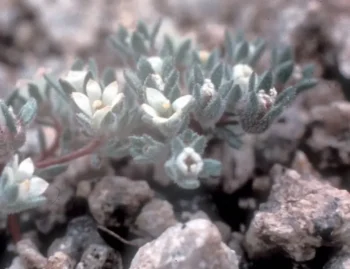
Twisselmann’s Threadplant: A Rare California Native Worth Protecting
Meet Twisselmann’s threadplant (Nemacladus twisselmannii), one of California’s most endangered wildflowers. This tiny annual herb might not win any beauty contests in your garden, but it represents something far more precious: a piece of California’s natural heritage hanging on by a thread—quite literally!
A Plant on the Edge
Before we dive into growing tips, let’s talk about the elephant in the room. Twisselmann’s threadplant has a Global Conservation Status of S1, meaning it’s critically imperiled. With typically five or fewer known occurrences and very few remaining individuals (fewer than 1,000), this little plant is fighting for survival. If you’re considering adding it to your garden, please ensure you’re using responsibly sourced material and never collect from wild populations.
Where to Find This Rare Beauty
This native California species calls the Golden State home, specifically areas within the San Joaquin Valley. As a true California endemic, it has evolved alongside the state’s unique Mediterranean climate and soil conditions over thousands of years.
- Species observed
- No observations
Getting to Know Twisselmann’s Threadplant
Don’t expect a showstopper when it comes to size—this diminutive annual forb typically reaches just 2-6 inches tall. As a member of the bellflower family, it produces tiny white to pale blue flowers that bloom from spring through early summer. While it may lack the dramatic presence of larger natives, its delicate beauty lies in the details.
Being an annual, Twisselmann’s threadplant completes its entire life cycle in one growing season, germinating, flowering, setting seed, and dying all within the span of a year.
Garden Role and Landscape Use
Let’s be honest—this isn’t a plant you’ll choose for its landscaping impact. Its small stature and subtle flowers make it more suited for:
- Native plant conservation gardens
- Specialized wildflower collections
- Educational botanical displays
- Wildlife habitat restoration projects
Think of it as the botanical equivalent of adopting a rare breed animal—you’re doing it for conservation value rather than curb appeal.
Growing Conditions
Twisselmann’s threadplant thrives in USDA hardiness zones 8-10, perfectly adapted to California’s Mediterranean climate. Here’s what this rare plant needs:
- Soil: Well-draining, often alkaline soils; tolerates clay and sandy conditions
- Water: Drought tolerant once established; prefers natural rainfall patterns
- Sun: Full sun to partial shade
- Climate: Mediterranean conditions with dry summers and mild, wet winters
Planting and Care Tips
Growing this rare species requires patience and attention to detail:
- Start from seed in fall to mimic natural germination patterns
- Prepare well-draining soil with good aeration
- Water sparingly—overwatering is often more harmful than drought
- Allow natural seed dispersal to encourage future generations
- Avoid fertilizers, which can disrupt its adapted growing patterns
Wildlife and Pollinator Benefits
While small in stature, Twisselmann’s threadplant likely provides nectar and pollen for tiny native pollinators, including small bees and beneficial insects. Every native plant, no matter how modest, plays a role in supporting local ecosystems.
The Conservation Conversation
Here’s the bottom line: should you grow Twisselmann’s threadplant? Only if you’re committed to conservation and can source seeds or plants responsibly. This species needs our help to survive, but that help must come through proper channels—botanical gardens, conservation organizations, and licensed native plant nurseries.
If you’re looking for easier-to-grow California natives with similar ecological benefits, consider exploring other members of the bellflower family or small annual wildflowers that aren’t critically endangered. Sometimes the best way to help rare plants is to grow their more common relatives and support habitat conservation efforts.
Twisselmann’s threadplant reminds us that every species, no matter how small or seemingly insignificant, has value in the grand tapestry of life. Whether you grow it or simply appreciate it from afar, this little plant deserves our respect and protection.