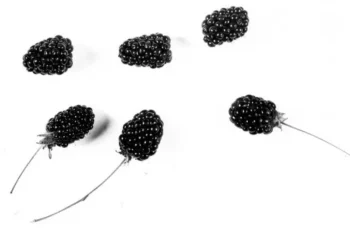
Upland Blackberry: A Native Groundcover Worth Considering
If you’re looking to add a low-growing native shrub to your landscape, upland blackberry (Rubus pergratus) might just be the understated gem you’ve been searching for. This perennial member of the rose family brings native authenticity to gardens across much of the eastern and midwestern United States, though it’s definitely more of a quiet achiever than a showstopper.
What Exactly Is Upland Blackberry?
Upland blackberry is a compact, low-growing shrub that typically stays under 1.5 feet tall, never exceeding 3 feet even at full maturity. Think of it as the humble cousin of those towering blackberry canes you might know from wild patches or berry farms. This little guy prefers to keep things low-key, spreading along the ground rather than reaching for the sky.
Like many plants in the Rubus genus, upland blackberry has collected quite a few scientific aliases over the years, including Rubus amnicola, Rubus avipes, and Rubus bractealis, among others. Botanists love to keep us on our toes with name changes!
Where Does It Call Home?
This native beauty has quite an impressive range across the lower 48 states, thriving in:
- New England states (Connecticut, Maine, Massachusetts, New Hampshire, Vermont)
- Mid-Atlantic region (New Jersey, New York, Pennsylvania, Virginia, West Virginia)
- Midwest (Illinois, Indiana, Iowa, Michigan, Minnesota, Ohio, Wisconsin)
That’s a pretty impressive native range, stretching from the Atlantic coast all the way into the heart of the Midwest.
- Species observed
- No observations
The Garden Reality Check
Here’s where we need to have an honest conversation: while upland blackberry is undeniably native and theoretically garden-worthy, it’s not exactly flooding the nursery trade. You’re more likely to encounter it in natural areas than in cultivation, which means finding it for your garden might require some detective work.
The plant has a somewhat uncertain conservation status (listed as S3?Q), which suggests it might be less common than we’d like. If you do find a source, make sure it’s responsibly sourced to avoid putting pressure on wild populations.
Growing Conditions and Care
Upland blackberry shows a preference for upland areas rather than wetlands, earning a Facultative Upland status across its range. This means it’s most comfortable in well-drained soils but won’t throw a fit if things get occasionally soggy.
As with many native plants, upland blackberry likely prefers:
- Partial shade to full sun
- Well-draining soil
- Natural moisture levels (neither bone dry nor waterlogged)
Unfortunately, specific cultivation information is limited since this isn’t a commonly grown garden plant. Your best bet is to mimic the conditions where you might find it naturally: woodland edges, clearings, and upland meadows.
Should You Plant It?
The short answer is: maybe, but with caveats. If you’re passionate about native plants and can source it responsibly, upland blackberry could add authentic local character to naturalized areas of your landscape. It’s particularly suited for:
- Native plant gardens
- Woodland edge plantings
- Natural groundcover areas
- Wildlife-friendly landscapes
However, given its limited availability and uncertain conservation status, you might want to consider more readily available native alternatives like wild ginger, native sedges, or other regional groundcovers that can provide similar ecological benefits without the sourcing challenges.
The Bottom Line
Upland blackberry represents the kind of understated native plant that makes ecosystems tick, even if it doesn’t make garden magazines swoon. While it’s not going to win any flashy flower contests, it offers the quiet satisfaction of growing something truly local. Just make sure you’re getting it from a reputable source that doesn’t impact wild populations.
If you can’t track down upland blackberry, don’t worry—there are plenty of other native groundcovers that will give you similar ecological benefits with easier availability. Sometimes the best native garden is the one you can actually plant!