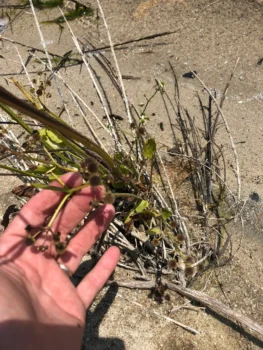
Upright Burhead: The Unsung Hero of Water Gardens
If you’re looking to add some authentic wetland character to your water garden or that perpetually soggy spot in your yard, meet upright burhead (Echinodorus berteroi). This humble aquatic perennial might not win any beauty contests, but it’s exactly the kind of hardworking native plant that makes wetland ecosystems tick.
What Exactly Is Upright Burhead?
Upright burhead is a perennial forb – basically a non-woody plant that comes back year after year. It belongs to the water plantain family and forms neat rosettes of lance-shaped leaves that emerge from wet soil or shallow water. Don’t expect flashy blooms; this plant produces small, modest white flowers on tall stalks that rise above the foliage during the growing season.
Where Does It Call Home?
This adaptable native has quite the geographic range! You’ll find upright burhead growing naturally across much of the United States, from Arizona to Wisconsin, and from California to Florida. It’s also native to Puerto Rico and the U.S. Virgin Islands. However, it’s worth noting that in Hawaii, it’s likely a non-native introduction.
- Species observed
- No observations
In Arkansas, upright burhead has a rarity status of S1S3, meaning it’s somewhat uncommon to rare in that state, so if you’re gardening there, you’re helping support a less common native species.
Why Your Wet Spots Will Love It
Here’s where upright burhead really shines – it’s what botanists call an obligate wetland plant. Translation? This little guy absolutely loves having wet feet and almost always grows in wetland conditions. This makes it perfect for:
- Pond edges and water gardens
- Rain gardens and bioswales
- Bog gardens
- Wetland restoration projects
- Those chronically soggy areas where other plants struggle
Garden Role and Design Potential
While upright burhead won’t be the star of your garden show, it’s an excellent supporting player. Use it as an emergent plant along pond margins, where its upright form adds vertical interest and helps create that naturalized wetland look. It’s particularly valuable in native plant gardens focused on supporting local ecosystems.
The plant works best in informal, naturalistic settings rather than formal landscapes. Think prairie potholes, constructed wetlands, and wild-style water features where authenticity matters more than ornamental pizzazz.
Growing Conditions and Care
Growing upright burhead is refreshingly straightforward – as long as you can provide what it craves most: consistent moisture. Here’s what it needs:
- Light: Full sun to partial shade
- Water: Consistently wet soil or shallow standing water
- Soil: Tolerates various soil types as long as they stay wet
- Hardiness: Zones 6-10 (based on its natural distribution)
Planting and Care Tips
The beauty of upright burhead lies in its low-maintenance nature once established:
- Plant in spring in wet soil or up to a few inches of standing water
- Space plants 12-18 inches apart for natural-looking colonies
- Water consistently – this plant cannot tolerate drought
- Minimal fertilization needed; it’s adapted to nutrient-poor wetland soils
- Allow seed heads to develop for natural self-seeding
- Cut back old foliage in late winter if desired
Wildlife and Pollinator Benefits
While not a pollinator magnet, upright burhead’s small white flowers do attract some insects during blooming season. More importantly, as an emergent wetland plant, it provides valuable habitat structure for amphibians, aquatic insects, and small wildlife that depend on wetland margins.
Should You Plant It?
If you have a water garden, pond, or consistently wet area that needs vegetation, upright burhead is definitely worth considering – especially if you’re focused on native plant gardening. It’s not going to wow visitors with showy blooms, but it will provide authentic wetland character and ecological function.
Just remember: this plant needs wet conditions to thrive. If you can’t provide consistent moisture, look for other native alternatives that tolerate drier soils.
For gardeners in Arkansas, growing this somewhat rare native species is a bonus way to support local plant diversity. Just make sure to source plants responsibly from reputable native plant nurseries rather than collecting from wild populations.
Upright burhead may be humble, but sometimes the best garden plants are the ones that quietly do their job while supporting the bigger ecosystem picture.