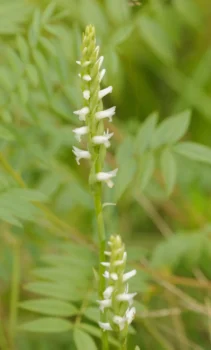
Ute Lady’s Tresses: A Rare Native Orchid Worth Protecting
Meet one of North America’s most elusive wildflowers: the Ute lady’s tresses (Spiranthes diluvialis). This delicate native orchid might not win any flashy flower contests, but it’s a true treasure that deserves our attention and protection. If you’re passionate about supporting rare native plants, this little beauty might just capture your heart—though growing it successfully is no walk in the park!
What Makes Ute Lady’s Tresses Special
Ute lady’s tresses is a perennial forb that belongs to the orchid family, creating spiraling towers of tiny white flowers that bloom in late summer. The flowers are arranged in a distinctive twisted pattern that gives the plant its tresses nickname—imagine nature’s version of a delicate white braid reaching toward the sky.
This herbaceous plant lacks significant woody tissue and dies back to ground level each winter, emerging fresh each spring from underground structures. You might also see it listed under its synonym, Spiranthes romanzoffiana var. diluvialis, in older botanical references.
Where to Find This Native Gem
Ute lady’s tresses calls the western regions of North America home, naturally occurring across nine states and one Canadian province. You’ll find wild populations in British Columbia, Colorado, Idaho, Montana, Nebraska, Nevada, Utah, Washington, and Wyoming—primarily in the intermountain and Great Plains regions.
- Species observed
- No observations
A Conservation Story Worth Knowing
Here’s the important part: Ute lady’s tresses is listed as Threatened under the U.S. Endangered Species Act, with a Global Conservation Status of S2S3. This means populations are small, scattered, and vulnerable. If you’re considering adding this plant to your garden, you absolutely must source it responsibly from reputable native plant nurseries that propagate their own stock—never collect from wild populations.
Garden Role and Landscape Appeal
While Ute lady’s tresses won’t be the showstopper of your garden, it offers something special for the right setting:
- Perfect for wetland and bog gardens
- Adds authentic native character to naturalistic landscapes
- Provides late-season blooms when many other plants are winding down
- Creates subtle vertical interest with its 6-18 inch flower spikes
- Supports conservation efforts for rare native species
The Reality of Growing Ute Lady’s Tresses
Let’s be honest—this isn’t a beginner-friendly plant. Ute lady’s tresses has very specific needs that make cultivation challenging:
Wetland Requirements: This plant has Facultative Wetland status across its range, meaning it usually grows in wetlands but can occasionally tolerate drier conditions. It needs consistently moist to wet soil conditions.
Growing Conditions:
- USDA Hardiness Zones 3-8
- Full sun to partial shade
- Moist to wet, alkaline soils
- Good drainage despite moisture needs
- Cool, humid conditions
Special Challenges: Like many orchids, Ute lady’s tresses depends on specific mycorrhizal fungi relationships in the soil. These beneficial fungi are essential for the plant’s survival and are incredibly difficult to replicate in home gardens.
Wildlife and Pollinator Benefits
When it comes to supporting local ecosystems, Ute lady’s tresses pulls its weight despite its small size. The flowers attract native bees and small butterflies, providing late-season nectar when many other blooms have faded. Every plant contributes to the genetic diversity of this rare species.
Should You Grow Ute Lady’s Tresses?
This is a plant for dedicated native plant enthusiasts who understand the commitment involved. Consider growing Ute lady’s tresses if you:
- Have experience with challenging native plants
- Can provide consistent wetland conditions
- Want to contribute to conservation efforts
- Can source plants responsibly
- Have patience for slow-growing, specialized plants
However, if you’re new to native gardening or don’t have suitable wet conditions, consider starting with easier native alternatives that provide similar ecological benefits without the conservation concerns.
The Bottom Line
Ute lady’s tresses represents the best and most challenging aspects of native plant gardening. It’s a beautiful, ecologically important species that deserves our protection and admiration. While growing it successfully requires dedication and the right conditions, supporting its conservation through responsible cultivation can be incredibly rewarding.
Remember: if you can’t provide the specialized care this rare orchid needs, you can still support its conservation by protecting wetland habitats and choosing other native plants that are easier to grow successfully.