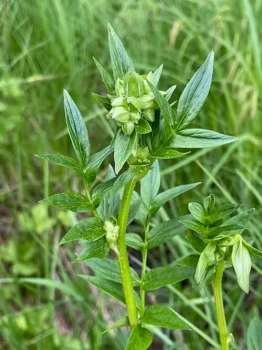
Vanbrunt’s Polemonium: A Rare Gem for Your Wetland Garden
If you’re looking to create a truly authentic native wetland garden, Vanbrunt’s polemonium (Polemonium vanbruntiae) might just be the perfect addition – if you can find it responsibly sourced, that is. This delicate perennial forb is one of those special plants that makes you feel like you’ve discovered a hidden treasure in the gardening world.
What Makes Vanbrunt’s Polemonium Special?
Vanbrunt’s polemonium is a charming native perennial that belongs to the phlox family. Don’t let its delicate appearance fool you – this little beauty is perfectly adapted to some of the most challenging growing conditions in the garden. As a forb (essentially a non-woody flowering plant), it brings a soft, naturalized look to any landscape without the bulk of shrubs or trees.
You might also see this plant listed under its scientific synonym, Polemonium caeruleum L. ssp. vanbruntiae, but Polemonium vanbruntiae is the accepted name that most nurseries and botanists use today.
Where Does It Call Home?
This northeastern native has quite a specific address. Vanbrunt’s polemonium naturally grows across a range that includes New Brunswick and Quebec in Canada, and extends down through Maine, Maryland, New Jersey, New York, Pennsylvania, Vermont, and West Virginia in the United States. It’s particularly fond of the boggy, wetland areas that dot this region’s landscape.
- Species observed
- No observations
A Word of Caution: Rarity Matters
Here’s where things get a bit serious. Vanbrunt’s polemonium carries a Global Conservation Status of S3S4, and in New Jersey, it’s listed as SX.1 on the Highlands Listed species. In plain English? This plant is rare and needs our protection. If you’re interested in growing it, please make sure you source it from reputable nurseries that propagate it responsibly rather than collecting it from wild populations.
The Beauty Factor
When Vanbrunt’s polemonium is happy, it puts on quite a show. The plant produces delicate clusters of bell-shaped flowers in lovely shades of blue to purple, creating a soft cloud of color that seems to hover above its finely divided, compound leaves. The overall effect is ethereal and naturalistic – perfect for gardeners who prefer subtle beauty over bold statements.
Where It Thrives in Your Garden
This is definitely not your typical garden center perennial. Vanbrunt’s polemonium has very specific needs that make it perfect for specialized garden situations:
- Bog gardens: Its natural love for wet conditions makes it ideal for constructed bog gardens
- Rain gardens: Perfect for areas designed to handle excess water runoff
- Wetland restorations: An excellent choice for naturalized wetland projects
- Woodland water features: Beautiful planted around natural or constructed ponds and streams
Growing Conditions: Embrace the Wet
If you’re used to plants that need well-drained soil, Vanbrunt’s polemonium will challenge your assumptions. This plant is classified as Facultative Wetland across its native range, which means it usually occurs in wetlands but can tolerate some non-wetland conditions. Here’s what it really wants:
- Moisture: Consistently moist to wet soil – think bog conditions
- Light: Partial shade to full sun, though it appreciates some protection in hotter climates
- Soil: Acidic to neutral pH, with high organic content
- Hardiness: Thrives in USDA zones 3-7
Planting and Care Tips
Successfully growing Vanbrunt’s polemonium is all about understanding its wetland nature:
- Plant in spring when soil temperatures warm up
- Never let the soil dry out – this is non-negotiable
- Apply organic mulch to help retain moisture
- Consider installing drip irrigation or choosing naturally wet spots
- Divide established clumps every 3-4 years to maintain vigor
- Be patient – it may take a season or two to establish fully
Wildlife and Pollinator Benefits
While Vanbrunt’s polemonium may be small, it punches above its weight when it comes to supporting local ecosystems. The nectar-rich flowers attract a variety of pollinators, including native bees and butterflies. As a native plant, it also supports the complex web of insects and other wildlife that have evolved alongside it over thousands of years.
Should You Grow It?
The honest answer is: it depends. If you have the right conditions – consistently moist soil and a commitment to conservation – then absolutely yes. Vanbrunt’s polemonium is a wonderful way to support native plant conservation while creating a unique garden feature.
However, if you’re looking for a low-maintenance perennial for typical garden beds, this probably isn’t your plant. Its specific moisture requirements and rarity status make it better suited for dedicated native plant gardeners who can provide the specialized care it needs.
Remember, by choosing to grow rare native plants like Vanbrunt’s polemonium, you’re not just creating a beautiful garden – you’re participating in conservation efforts that help preserve these species for future generations. Just make sure you’re doing it responsibly by sourcing from reputable nurseries that propagate rather than wild-collect their plants.