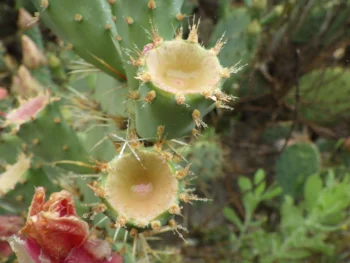
Vasey’s Coastal Pricklypear: A Rare Gem for Your Desert Garden
If you’re looking to add a touch of coastal California charm to your xerophytic landscape, Vasey’s coastal pricklypear (Opuntia ×vaseyi) might just be the unique cactus you’ve been searching for. This distinctive hybrid prickly pear brings both beauty and ecological value to the right garden setting, though there are some important considerations before adding it to your plant wishlist.
What Makes Vasey’s Coastal Pricklypear Special?
Vasey’s coastal pricklypear is a native shrub that typically grows as a multi-stemmed woody plant, usually staying under 13-16 feet in height. Like other prickly pears, it features the classic paddle-shaped segments (called cladodes) that give these cacti their distinctive appearance. In spring, this perennial produces cheerful yellow flowers that eventually give way to colorful fruits, creating a stunning display that changes throughout the growing season.
Where Does It Call Home?
This native beauty has a limited natural range, growing wild in Arizona and California. As a plant specifically adapted to coastal conditions, it thrives in the unique climate and soil conditions found in these southwestern regions.
- Species observed
- No observations
Important Conservation Note
Here’s something crucial every responsible gardener should know: Vasey’s coastal pricklypear has a Global Conservation Status of S3T1T2, indicating it’s considered rare in the wild. While this makes it an intriguing addition to appropriate gardens, it’s essential to source any plants from reputable nurseries that propagate their stock responsibly rather than collecting from wild populations.
Is This Cactus Right for Your Garden?
Vasey’s coastal pricklypear shines in specific garden settings:
- Mediterranean-style landscapes
- Desert and xeriscape gardens
- Coastal gardens in appropriate climate zones
- Rock gardens with excellent drainage
- Native plant collections
This plant works beautifully as a focal point or specimen plant, and its drought tolerance makes it perfect for water-wise landscaping. The spring flowers also provide nectar for bees and other pollinators, adding ecological value to your garden.
Growing Conditions and Care
Like most cacti, Vasey’s coastal pricklypear appreciates specific growing conditions:
- Sunlight: Full sun exposure for best growth and flowering
- Soil: Well-draining sandy or rocky soils are essential
- Water: Drought tolerant once established; minimal irrigation needed
- Climate: Best suited for USDA hardiness zones 9-11
Planting and Care Tips
Successfully growing Vasey’s coastal pricklypear isn’t complicated, but there are some key points to remember:
- Plant in spring after the last frost danger has passed
- Ensure excellent drainage to prevent root rot
- Water sparingly – overwatering is more dangerous than drought
- Protect from hard frosts, especially when young
- Handle with thick gloves and long sleeves due to spines
- Allow plenty of space for the plant to reach its mature size
The Bottom Line
Vasey’s coastal pricklypear can be a stunning addition to the right garden, offering unique beauty, pollinator support, and water-wise qualities that make it perfect for sustainable landscaping. However, its rarity status means that if you decide to grow this special cactus, you’ll want to source it responsibly from nurseries that propagate rather than wild-collect their plants.
If you’re in the appropriate climate zone and have the right growing conditions, this native gem could become a treasured part of your landscape – just remember to treat it with the respect that any rare plant deserves.