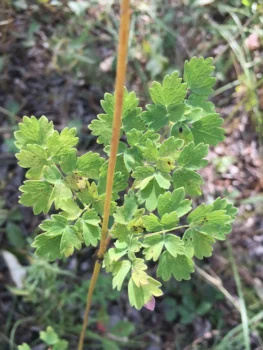
Veiny Meadow-Rue: A Delicate Native Beauty for Your Garden
If you’re looking for a native plant that brings subtle elegance and natural charm to your landscape, veiny meadow-rue (Thalictrum venulosum) might just be the perfect addition. This often-overlooked native perennial offers delicate beauty and ecological value that makes it a wonderful choice for gardeners who appreciate understated grace.
What Makes Veiny Meadow-Rue Special?
Veiny meadow-rue is a native North American perennial that belongs to the buttercup family. As a forb (a fancy term for an herbaceous flowering plant), it lacks woody stems but makes up for it with its distinctive, finely divided foliage that creates an almost lace-like appearance in the garden. The leaves feature prominent veining that gives this plant its common name – and trust us, once you see those intricate leaf patterns, you won’t forget them!
This charming native produces small, delicate flowers that range from white to greenish hues, arranged in loose, airy clusters that seem to float above the foliage like tiny clouds. While the flowers might not stop traffic, they have a quiet beauty that’s perfect for naturalistic garden designs.
Where Does It Call Home?
One of the most impressive things about veiny meadow-rue is its extensive native range. This adaptable plant naturally occurs across a vast area of North America, thriving in locations from Alberta and British Columbia in the north, all the way down to New Mexico and across to Maine. You’ll find it growing wild in states and provinces including Colorado, Montana, Minnesota, Michigan, Vermont, Washington, and many others – making it a true continental native.
- Species observed
- No observations
Why Your Garden (and Local Wildlife) Will Love It
There are several compelling reasons to consider adding veiny meadow-rue to your landscape:
- Native authenticity: Supporting local ecosystems by choosing plants that naturally belong in your region
- Pollinator support: The small flowers attract beneficial insects including flies and small bees
- Low maintenance: Once established, this perennial is quite self-sufficient
- Textural interest: The fine, compound leaves provide beautiful contrast against broader-leafed plants
- Versatile moisture tolerance: Adapts to various moisture conditions depending on your region
Perfect Garden Partnerships
Veiny meadow-rue shines in several types of garden settings:
- Native plant gardens: Combines beautifully with other indigenous species
- Woodland gardens: Thrives in the dappled light beneath trees
- Naturalized meadow plantings: Adds delicate texture to wildflower mixes
- Rain gardens: Its facultative wetland status makes it suitable for areas with variable moisture
Growing Conditions and Care
One of the best things about veiny meadow-rue is its adaptability. This hardy perennial can handle USDA zones 3-7, making it suitable for gardeners across much of the northern United States and southern Canada.
Light requirements: Partial shade to full sun, though it appreciates some protection from intense afternoon sun in hotter climates.
Soil needs: Adaptable to various soil types, but performs best in moist to moderately dry, well-draining soil.
Water preferences: Here’s where it gets interesting – this plant’s water needs vary by region! In the Arid West, it typically prefers upland (drier) conditions, while in the Northcentral and Northeast regions, it’s more often found in wetland situations. This flexibility makes it an excellent choice for gardeners dealing with variable moisture conditions.
Planting and Care Tips
Getting started with veiny meadow-rue is refreshingly straightforward:
- Planting time: Spring or fall are ideal for establishment
- Spacing: Allow adequate room for the plant to spread naturally via rhizomes
- Watering: Provide consistent moisture during the first growing season, then adjust based on your regional conditions
- Maintenance: Minimal care required once established – just remove spent flowers if you prefer a tidier look
- Propagation: Can be divided in spring or fall, or grown from seed with patience
Is Veiny Meadow-Rue Right for Your Garden?
This native beauty is an excellent choice if you:
- Want to support local ecosystems with native plants
- Appreciate subtle, naturalistic garden designs
- Need a low-maintenance perennial for challenging sites
- Are creating habitat for native pollinators and wildlife
- Want a plant that can adapt to varying moisture conditions
While veiny meadow-rue might not be the showiest plant in your garden, it brings something special – a quiet elegance and authentic native presence that connects your landscape to the natural heritage of North America. In a world of flashy garden center offerings, sometimes the most rewarding plants are those that whisper rather than shout.
Consider giving this delicate native a try. Your local pollinators will thank you, and you’ll gain a new appreciation for the understated beauty that native plants bring to our gardens.