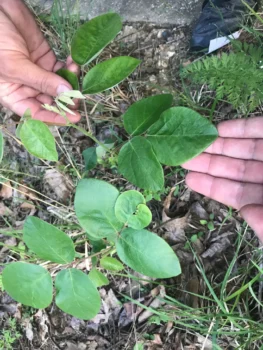
Velvetleaf Ticktrefoil: A Woodland Native Worth Discovering
If you’re looking to add some understated charm to your woodland garden while supporting local wildlife, velvetleaf ticktrefoil (Desmodium viridiflorum) might just be the perfect native plant you’ve never heard of. This unassuming perennial herb brings subtle beauty and ecological value to shaded spaces across much of the eastern United States.
What Makes Velvetleaf Ticktrefoil Special?
Don’t let the name fool you – this isn’t related to the invasive velvetleaf weed that plagues farmers. Velvetleaf ticktrefoil is a well-behaved native perennial that belongs to the pea family. Its claim to fame comes from its distinctive three-part leaves and small clusters of pink to purple flowers that appear in late summer when many woodland plants are winding down for the season.
The ticktrefoil part of its name refers to the plant’s unique seed pods, called loments, which break apart into segments that can stick to clothing and animal fur – nature’s way of getting around! While this might sound annoying, it’s actually a fascinating adaptation that helps the plant spread naturally.
Where Does It Grow Naturally?
Velvetleaf ticktrefoil is native to the lower 48 states and can be found growing wild across a impressive range of states including Alabama, Arkansas, Delaware, District of Columbia, Florida, Georgia, Indiana, Kentucky, Louisiana, Maryland, Mississippi, Missouri, New Jersey, New York, North Carolina, Ohio, Oklahoma, Pennsylvania, South Carolina, Tennessee, Texas, Virginia, and West Virginia.
- Species observed
- No observations
A Word About Rarity
Before you rush out to find this plant, there’s something important to know: velvetleaf ticktrefoil is considered rare in some areas. In New Jersey, for example, it has a rarity status of S2 (imperiled) and is listed as a Highlands species of concern. If you’re interested in growing this native beauty, please make sure you source it responsibly from reputable native plant nurseries rather than collecting from wild populations.
Why Grow Velvetleaf Ticktrefoil?
This native herb offers several compelling reasons to include it in your landscape:
- Wildlife Support: The flowers attract small bees, butterflies, and other pollinators when they bloom in late summer
- Low Maintenance: Once established, it requires minimal care and can handle various soil conditions
- Woodland Character: Perfect for adding authentic native plant diversity to shaded areas
- Extended Interest: Provides late-season blooms when many other plants are finishing up
- Natural Spread: Can self-seed to create naturalized colonies over time
Growing Conditions and Care
Velvetleaf ticktrefoil is refreshingly easy to grow if you can provide the right conditions:
Light: Prefers partial shade to full shade, making it ideal for woodland gardens and the understory of larger trees.
Soil: Adaptable to various soil types, from moist to moderately dry conditions. It’s not particularly picky about soil pH either.
Hardiness: Thrives in USDA zones 5-9, covering most of its natural range.
Size: As an herbaceous perennial, it dies back to the ground each winter and emerges fresh each spring. Expect a modest-sized plant that won’t overwhelm your garden.
Planting and Care Tips
Getting velvetleaf ticktrefoil established in your garden is straightforward:
- Plant in spring or fall when temperatures are moderate
- Choose a partially shaded location with decent drainage
- Water regularly during the first growing season to help establish roots
- Once established, it should handle normal rainfall without supplemental watering
- Cut back dead stems in late fall or early spring
- Allow some seed pods to mature if you want natural spreading
Perfect Garden Partners
Velvetleaf ticktrefoil works beautifully in woodland gardens alongside other native shade lovers like wild ginger, mayapple, and various ferns. It’s also an excellent choice for naturalized areas where you want to increase native plant diversity without a lot of fuss.
The Bottom Line
While velvetleaf ticktrefoil might not be the showiest plant in your garden, it represents the kind of humble native species that forms the backbone of healthy local ecosystems. Its late-summer blooms provide nectar when pollinators need it most, and its undemanding nature makes it a perfect choice for gardeners who want to support native biodiversity without a lot of maintenance.
Just remember to source your plants responsibly – this native beauty is worth preserving for future generations of both gardeners and wildlife to enjoy.