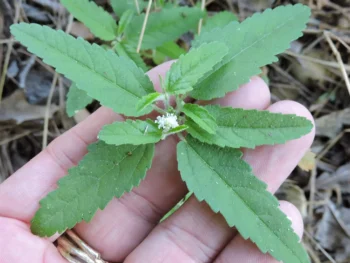
Vente Conmigo: A Modest Native Annual with Wildlife Appeal
If you’re looking for a showstopping garden centerpiece, vente conmigo (Croton glandulosus var. septentrionalis) probably isn’t your plant. But if you’re passionate about supporting native wildlife and creating authentic habitat in your garden, this unassuming annual herb deserves a closer look.
What is Vente Conmigo?
Vente conmigo is a native annual forb that belongs to the spurge family. As an annual, it completes its entire life cycle in one growing season, sprouting from seed, flowering, producing new seeds, and dying all within the same year. This small herb lacks the woody stems of shrubs and trees, instead producing soft, herbaceous growth that dies back completely each winter.
You might also encounter this plant listed under its synonyms Croton glandulosus var. angustifolius or Croton glandulosus var. simpsonii in older botanical references.
Where Does Vente Conmigo Grow Naturally?
This hardy little native has an impressive range across the lower 48 states, naturally occurring in 29 states from coast to coast. You’ll find it growing wild from Delaware and New Jersey in the northeast, down through the southeastern states like Florida and Georgia, west through Texas and Oklahoma, and north into the upper Midwest including Minnesota, Wisconsin, and Michigan.
- Species observed
- No observations
Why Consider Growing Vente Conmigo?
While vente conmigo won’t win any beauty contests, it serves an important ecological role that makes it worth considering for certain garden situations:
- Wildlife Support: This native annual provides food for birds, contributing 5-10% of terrestrial birds’ diets in its native range
- Native Plant Gardens: Perfect for gardeners focused on creating authentic native habitat
- Low Maintenance: As a self-seeding annual, it requires minimal care once established
- Naturalized Areas: Excellent for wild areas of your property where you want to support local ecosystems
What to Expect in Your Garden
Let’s be honest about what you’re getting with vente conmigo. This is not a plant you’ll be featuring in your Instagram garden photos. It’s a small, modest herb with inconspicuous flowers and an overall unremarkable appearance. Think of it as the garden equivalent of a reliable supporting actor rather than the leading star.
However, what it lacks in visual drama, it makes up for in ecological value and adaptability. It’s particularly well-suited for:
- Native wildlife gardens
- Prairie or meadow plantings
- Naturalized areas
- Disturbed soil rehabilitation
Growing Conditions and Care
One of vente conmigo’s strengths is its adaptability. This resilient annual can handle a variety of growing conditions and seems particularly at home in disturbed soils – those areas where the ground has been recently worked or naturally disrupted.
Based on its wide native range, vente conmigo should be adaptable to USDA hardiness zones 3 through 9, though as an annual, it’s more about seasonal growing conditions than winter hardiness.
Planting and Establishment
Since vente conmigo is an annual that readily self-seeds, the key is getting it established in your garden initially. Once it’s happy in a location, it should return on its own each year through natural seeding.
The easiest approach is to scatter seeds in appropriate areas during fall or early spring, allowing natural weather cycles to trigger germination. Choose spots that mimic its preferred habitat – areas with exposed soil, edges of gardens, or naturalized spaces.
Is Vente Conmigo Right for Your Garden?
Consider vente conmigo if you:
- Are creating native habitat for local wildlife
- Want to support bird populations in your area
- Have naturalized areas that need native plant coverage
- Appreciate plants for their ecological role rather than just appearance
- Are working with disturbed soils that need stabilization
Skip vente conmigo if you:
- Need plants with significant visual impact
- Are designing formal garden spaces
- Want plants primarily for human enjoyment rather than wildlife support
The Bottom Line
Vente conmigo represents the quiet heroes of native gardening – plants that may not demand attention but play crucial roles in supporting local ecosystems. While it won’t become the star of your garden, it can be a valuable supporting player in native plant communities, especially if you’re passionate about creating habitat for birds and other wildlife.
For gardeners committed to authentic native landscaping, vente conmigo offers an opportunity to include a truly widespread native species that birds actually use for food. Sometimes the most important garden residents are the ones you barely notice.