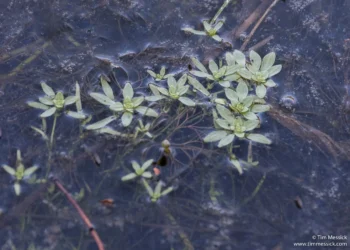
Vernal Water-Starwort: A Native Aquatic Gem for Your Water Garden
If you’re looking to add authentic native character to your water garden or pond, vernal water-starwort (Callitriche palustris) might just be the unsung hero you’ve been searching for. This delicate aquatic perennial brings natural charm to wetland environments while supporting local ecosystems in ways that many gardeners overlook.
What Is Vernal Water-Starwort?
Vernal water-starwort is a native North American aquatic forb that’s perfectly adapted to life in and around water. As a perennial herb without woody stems, this low-growing plant forms single crowns that spread at a moderate rate through wet environments. Don’t expect showy blooms—this plant’s beauty lies in its delicate, fine-textured green foliage and its important ecological role.
Where Does It Naturally Grow?
This remarkable little plant has one of the most extensive native ranges you’ll find, stretching across virtually all of North America. From Alaska and the Canadian territories down through the lower 48 states, vernal water-starwort has made itself at home in wetland environments from coast to coast. You’ll find it thriving in states as diverse as California, Texas, Maine, and everywhere in between.
- Species observed
- No observations
Why Consider Vernal Water-Starwort for Your Garden?
Here’s where things get interesting—and where you’ll want to pay attention to some important details:
The Good News
- Truly native: This plant belongs here and supports local ecosystems
- Rapid growth: Once established, it fills in quickly
- Cold hardy: Survives temperatures down to -33°F
- Fire resistant: Bounces back after natural disturbances
- Low maintenance: Thrives with minimal intervention once established
Important Considerations
Rarity Alert: Before you get too excited, know that vernal water-starwort is listed as rare in New Jersey with an S2 status. If you live in areas where it’s uncommon, only source this plant from reputable native plant suppliers who use responsibly collected seeds or propagated materials—never harvest from wild populations.
Growing Conditions: It’s All About the Water
Vernal water-starwort is what botanists call an obligate wetland species, which means it almost always needs wet conditions to thrive. Here’s what you need to know:
- Moisture: Requires consistently wet to saturated soils—think pond margins, bog gardens, or shallow water areas
- Soil: Adapts to various soil textures but prefers acidic conditions (pH 5.2-6.8)
- Light: Needs full sun—it’s shade intolerant
- Space: Grows to about 0.8 feet tall with a spreading, decumbent growth habit
- Climate: Needs at least 90 frost-free days and 32-55 inches of annual precipitation
Perfect Garden Settings
Vernal water-starwort shines in specific landscape situations:
- Natural pond edges and shallow water areas
- Bog gardens and rain gardens
- Wetland restoration projects
- Native plant water features
- Naturalized stream banks (where appropriate)
This isn’t a plant for traditional perennial borders or dry landscape areas—it needs that wetland environment to truly thrive.
Planting and Care Tips
Getting vernal water-starwort established requires some patience, but the process is straightforward:
Propagation
- From seed: Seeds are tiny (about 1 million per pound!) and germinate best in consistently moist conditions
- From sprigs: Small vegetative pieces can be planted directly in wet soil
- Timing: Plant in spring when active growth begins
Establishment
- Plant in permanently wet or saturated soil
- Provide full sun exposure
- Allow 2,700-4,800 plants per acre for restoration projects
- Be patient—seedlings have medium vigor but establish well once growing
Ongoing Care
Once established, vernal water-starwort is refreshingly low-maintenance. It doesn’t require fertilization, has high fire tolerance, and naturally manages its own growth in appropriate wetland conditions.
Wildlife and Ecological Benefits
While the specific wildlife benefits aren’t well-documented, aquatic native plants like vernal water-starwort typically provide important habitat for aquatic insects, amphibians, and other wetland-dependent creatures. As part of a native wetland plant community, it contributes to the overall health of aquatic ecosystems.
The Bottom Line
Vernal water-starwort is a specialized but valuable addition to the right garden setting. If you have a natural pond, bog garden, or wetland restoration project, and you can source it responsibly, this native aquatic plant offers authentic regional character and ecological value. Just remember—it’s all about location, location, location. Give it the wet, sunny conditions it craves, and you’ll have a thriving piece of North America’s natural wetland heritage right in your own backyard.
Always source plants from reputable native plant nurseries, especially in areas where the species may be uncommon, and never collect from wild populations.