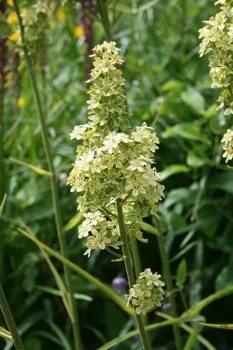
Virginia Bunchflower: A Towering Native for Your Wetland Garden
If you’re looking to add some serious height and drama to your rain garden or wetland area, meet Virginia bunchflower (Veratrum virginicum). This impressive native perennial can shoot up to 6 feet tall, topped with frothy clusters of tiny white flowers that seem to float like clouds above the garden. It’s not your typical garden center find, but for those seeking authentic native plants for wet areas, this architectural beauty is worth the hunt.
What Makes Virginia Bunchflower Special
Virginia bunchflower is a true native success story, naturally occurring across much of the eastern and central United States. You’ll find this stately perennial growing wild from Minnesota down to Florida and from the Atlantic coast west to Kansas and Texas. Its wide distribution tells us this is one adaptable plant – though it does have some very specific preferences we’ll get to.
- Species observed
- No observations
The plant goes by a few scientific aliases (Melanthium virginicum and Melanthium dispersum), but Virginia bunchflower is the name that’s stuck. As a member of the forb family, it’s technically an herbaceous perennial that dies back to the ground each winter and emerges fresh each spring.
A Word About Rarity
Before we dive into growing tips, there’s something important to know: Virginia bunchflower is becoming quite rare in some areas. In New Jersey, it’s actually listed as endangered, and Arkansas considers it uncommon enough to give it an S2 rarity status. If you’re planning to add this beauty to your garden, please make sure you’re purchasing from reputable native plant nurseries that use responsibly sourced, propagated material – never wild-collected plants.
Garden Design and Landscape Role
Virginia bunchflower is the tall, quiet type that makes a statement without being flashy. Here’s where it shines:
- Back-of-the-border plantings where its height won’t overshadow shorter natives
- Rain gardens and bioswales where its water-loving nature is an asset
- Naturalized wetland areas and prairie restorations
- Native plant gardens focused on regional flora
- Bog gardens and consistently moist areas where other plants struggle
The plant’s architectural form – with large, pleated leaves arranged in distinctive whorls around the stem – provides excellent structural interest even before the dramatic flower spikes appear in mid to late summer.
Growing Conditions: It’s All About the Water
Here’s where Virginia bunchflower gets particular: it really, really likes wet feet. The wetland status varies by region, but the message is clear – this plant thrives in consistently moist to wet conditions:
- Soil moisture: Consistently moist to wet; tolerates seasonal flooding
- Soil type: Adaptable to various soil types as long as moisture is adequate
- Light requirements: Full sun to partial shade
- USDA Hardiness Zones: 3-8
- pH preference: Acidic to neutral soils
In coastal plain regions, it’s considered an obligate wetland plant, meaning it almost always occurs in wetlands. In other regions, it’s a facultative wetland plant, usually found in wet areas but occasionally tolerating drier conditions.
Planting and Care Tips
Growing Virginia bunchflower successfully is mostly about getting the location right:
- Timing: Plant in spring after the last frost
- Location: Choose the wettest spot in your garden – this isn’t the plant for well-drained areas
- Spacing: Allow 2-3 feet between plants as mature specimens can get quite robust
- Mulching: Apply organic mulch around the base to retain moisture
- Watering: In natural wetland conditions, supplemental watering shouldn’t be necessary
- Maintenance: Very low maintenance once established; cut back in late fall or early spring
Important Safety Note
Before you get too excited about this native beauty, know that all parts of Virginia bunchflower are toxic if ingested. This is definitely not a plant for areas where children or pets might be tempted to sample the foliage. The toxicity is just part of its natural defense system, but it’s worth keeping in mind when planning your garden layout.
Wildlife and Pollinator Benefits
While Virginia bunchflower may not be the biggest pollinator magnet in your garden, its summer flower clusters do attract various insects, particularly flies, beetles, and smaller bees. The real wildlife value comes from its role in wetland ecosystems, where it provides habitat structure and contributes to the overall health of these important environments.
Is Virginia Bunchflower Right for Your Garden?
Virginia bunchflower is perfect for you if:
- You have a consistently wet area that needs a tall, structural plant
- You’re creating a rain garden or wetland restoration
- You love native plants and don’t mind seeking out specialty nurseries
- You want something truly unusual that most neighbors won’t have
- You have space for a plant that can reach 3-6 feet tall
It might not be the best choice if you have well-drained soil, limited space, or prefer plants that provide major pollinator appeal. But for the right wet spot, Virginia bunchflower brings an elegant, wild beauty that’s hard to match with non-native alternatives.
Remember, by choosing this native perennial, you’re supporting local ecosystems and helping preserve a plant that’s becoming increasingly rare in some parts of its range. Just make sure you’re getting it from responsible sources – your local wetlands will thank you for it.