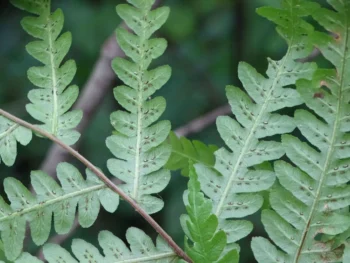
Virginia Chainfern: The Elegant Wetland Wonder for Challenging Garden Spots
If you’ve ever stared at a soggy corner of your yard wondering what on earth could possibly thrive there, meet your new best friend: Virginia chainfern (Woodwardia virginica). This native beauty doesn’t just tolerate wet feet – it absolutely loves them!
What Exactly Is Virginia Chainfern?
Virginia chainfern is a stunning perennial fern that’s native to both Canada and the United States. Unlike your typical garden plants, this isn’t a flowering beauty – it’s all about that gorgeous foliage. The chain in its name comes from the distinctive chain-like pattern of spore cases (called sori) that line the undersides of its fronds, creating an intricate design that’s both functional and beautiful.
This fern creates large, bold fronds that can give your garden an almost tropical feel, even in cooler climates. Think of it as nature’s way of adding drama to those tricky wet spots where other plants fear to tread.
Where Does It Call Home?
Virginia chainfern has quite the impressive range across North America. You’ll find it naturally growing from southeastern Canada all the way down to Florida, and from the Atlantic coast west to Texas and the Great Lakes region. Specifically, it grows wild in Alabama, Arkansas, Connecticut, Delaware, Florida, Georgia, Illinois, Indiana, Kentucky, Louisiana, Maine, Maryland, Massachusetts, Michigan, Mississippi, New Hampshire, New Jersey, New York, North Carolina, Ohio, Pennsylvania, Rhode Island, South Carolina, Tennessee, Texas, Vermont, Virginia, West Virginia, and the Canadian provinces of New Brunswick, Nova Scotia, Ontario, Prince Edward Island, and Quebec.
- Species observed
- No observations
Why Your Garden Might Love This Fern
Here’s where Virginia chainfern really shines – it’s what botanists call an obligate wetland plant, which is a fancy way of saying it almost always lives in wet places. This makes it absolutely perfect for:
- Rain gardens that collect runoff
- Boggy areas that never seem to dry out
- Stream banks and pond edges
- Those mysterious wet spots in your yard where grass just won’t grow
- Woodland gardens with naturally moist soil
Hardy in USDA zones 3-9, this fern can handle quite a range of climates, making it accessible to gardeners across much of the continent.
Spotting Virginia Chainfern in the Wild
Want to identify this beauty? Look for these telltale signs:
- Large, pinnately compound fronds (meaning they’re divided into smaller leaflets)
- Chain-like rows of spore cases on the underside of fertile fronds
- A bold, almost tropical appearance despite being cold-hardy
- Growing in consistently wet or boggy conditions
- Partial to full shade locations
Growing Your Own Virginia Chainfern
Ready to give this wetland wonder a try? Here’s what you need to know:
Light Requirements: Partial to full shade – think dappled woodland light or the north side of your house.
Soil Needs: Consistently moist to wet, acidic soil. If your soil dries out regularly, this isn’t the fern for you.
Planting Tips: Spring is the best time to plant. Choose a spot that stays naturally moist, and don’t be afraid of those problem wet areas – they’re perfect!
Care and Maintenance: Once established, Virginia chainfern is pretty low-maintenance. Keep the soil consistently moist (which should happen naturally in the right location), and remove old, brown fronds in late winter or early spring to make room for new growth.
The Bottom Line
Virginia chainfern isn’t for every garden, but if you have a wet, shady spot that’s been giving you trouble, this native beauty could be exactly what you need. It won’t provide nectar for pollinators like flowering plants do, but it will give you gorgeous, architectural foliage and help you work with your landscape’s natural conditions rather than fighting against them.
Plus, there’s something deeply satisfying about growing a plant that’s been thriving in North American wetlands for thousands of years – you’re not just adding beauty to your garden, you’re connecting with the natural heritage of your region.