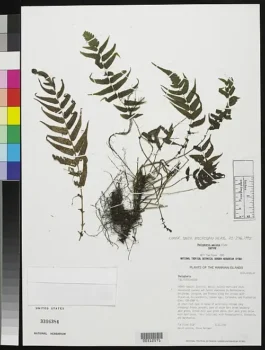
The Waioli Valley Maiden Fern: A Critically Endangered Hawaiian Treasure
Meet the Waioli Valley maiden fern (Thelypteris wailele), one of Hawaii’s rarest and most elusive native plants. This isn’t your typical garden center find – in fact, you’ll never see this extraordinary fern for sale anywhere, and for very good reason.
What Makes This Fern So Special?
The Waioli Valley maiden fern is what botanists call a true endemic – it exists nowhere else on Earth except in Hawaii. As a member of the maiden fern family (Thelypteridaceae), this perennial fern represents millions of years of isolated evolution in the Hawaiian Islands.
You might also see this plant referenced by its scientific synonym, Cyclosorus wailele, but Thelypteris wailele is the currently accepted name. Unlike typical garden ferns, this species has adapted specifically to Hawaii’s unique wet forest ecosystems.
Where Does It Live?
This rare fern calls Hawaii home, growing naturally in the state’s native wet forests. These pristine habitats provide the exact conditions this specialized plant needs to survive – something that’s become increasingly rare as Hawaii’s landscapes have changed over time.
- Species observed
- No observations
A Plant in Crisis
Here’s where things get serious: the Waioli Valley maiden fern has a Global Conservation Status of S1, meaning it’s critically imperiled. In scientific terms, this means there are typically five or fewer known populations, or fewer than 1,000 individual plants remaining in the wild. That’s incredibly rare – we’re talking about a species teetering on the edge of extinction.
Why You Can’t (and Shouldn’t) Grow It
Before you start dreaming of adding this unique fern to your collection, let’s be clear: this plant is absolutely not available for cultivation, nor should it be. Here’s why:
- Its critically endangered status means every single plant in the wild is precious
- Removing plants from wild populations could push the species toward extinction
- It requires very specific Hawaiian wet forest conditions that are nearly impossible to replicate
- Conservation efforts focus on protecting existing populations, not cultivation
Its Natural Habitat
The Waioli Valley maiden fern thrives in Hawaii’s wet forests, where it enjoys consistent moisture and filtered sunlight. These environments are classified as facultative wetland habitats, meaning the fern usually grows in wetland conditions but can occasionally be found in drier areas nearby.
What You Can Do Instead
While you can’t grow the Waioli Valley maiden fern, you can still support Hawaiian native plants and conservation:
- Choose other native Hawaiian ferns that are more common and available through responsible sources
- Support organizations working to protect Hawaii’s remaining wet forests
- Learn about and advocate for native plant conservation
- Visit botanical gardens that work with rare Hawaiian species (from a respectful distance)
The Bigger Picture
The Waioli Valley maiden fern represents something much larger than just a rare plant – it’s a symbol of Hawaii’s incredible biodiversity and the urgent need to protect what remains. Every rare endemic species like this one tells the story of evolution in isolation and reminds us of our responsibility as stewards of the natural world.
While we can’t bring this remarkable fern into our gardens, we can appreciate its existence and work to ensure that future generations might still encounter it thriving in Hawaii’s native forests. Sometimes the best way to love a plant is to leave it exactly where it belongs – wild and free in its natural home.