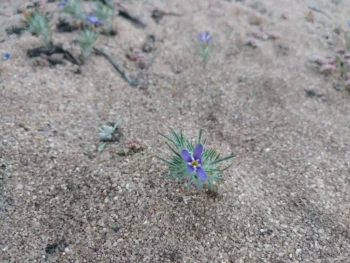
Wand Woollystar: A Delicate California Native Worth Growing Responsibly
If you’re looking to add a touch of understated elegance to your California native garden, meet the wand woollystar (Eriastrum virgatum). This charming annual wildflower might not be the showiest plant in your garden, but it brings a delicate beauty and important ecological benefits that make it a worthy addition for the conscious gardener.
What is Wand Woollystar?
Wand woollystar is a native California annual forb – essentially a soft-stemmed herbaceous plant that completes its entire life cycle in one growing season. True to its name, this plant produces slender, wand-like stems topped with clusters of small, star-shaped flowers that range from white to pale blue. As a member of the phlox family, it shares that characteristic of producing numerous small, delicate blooms that create a lovely textural element in wildflower displays.
Where Does It Grow Naturally?
This California endemic calls the Golden State home, with populations primarily found in the Sierra Nevada foothills and Central Valley regions. It’s perfectly adapted to California’s mediterranean climate and represents the kind of specialized flora that makes the state’s ecosystems so unique.
- Species observed
- No observations
Why Consider Growing Wand Woollystar?
There are several compelling reasons to include this native in your landscape:
- Low maintenance: Once established, it requires minimal water and care
- Pollinator magnet: The small flowers attract native bees, butterflies, and other beneficial insects
- Authentic California gardening: You’re growing something that truly belongs in your local ecosystem
- Drought tolerance: Perfect for water-wise landscaping
- Natural charm: Adds delicate texture and movement to wildflower gardens
Important Conservation Note
Before you rush to plant wand woollystar, there’s something important to know: this species has a vulnerable conservation status. With only an estimated 3,000 to 10,000 individuals remaining in the wild, it’s considered at risk. This means if you want to grow it, you absolutely must source seeds or plants from reputable native plant nurseries that use responsibly collected material – never collect from wild populations.
Growing Conditions and Care
Wand woollystar is surprisingly easy to grow once you understand its needs:
- Sun exposure: Full sun
- Soil: Well-draining soils; adapts to various soil types
- Water: Low water needs once established; drought tolerant
- USDA zones: 8-10 (thrives in California’s mediterranean climate)
- Planting time: Direct seed in fall for spring germination
Perfect Garden Settings
This delicate annual works beautifully in:
- Native plant gardens
- Wildflower meadows
- Drought-tolerant landscapes
- Pollinator gardens
- Naturalized areas
Planting and Care Tips
Growing wand woollystar successfully is refreshingly straightforward:
- Seeding: Direct sow seeds in fall; they need the cool, moist winter period to germinate properly in spring
- Spacing: Allow plants room to spread naturally
- Watering: Water during establishment, then reduce to minimal supplemental irrigation
- Maintenance: Very little needed – let plants go to seed to encourage natural reseeding
Supporting Pollinators and Wildlife
While wand woollystar might look delicate, it’s actually a pollinator powerhouse. The small, clustered flowers are perfectly sized for native bees and provide nectar for butterflies and other beneficial insects. By growing this native plant, you’re supporting the intricate web of relationships that keep California’s ecosystems healthy.
The Bottom Line
Wand woollystar offers California gardeners a chance to grow something truly special – a beautiful native plant that supports local wildlife while requiring minimal resources. Just remember to source your plants or seeds responsibly to help protect this vulnerable species. When grown thoughtfully, this charming annual can add authentic California character to your garden while contributing to conservation efforts. It’s a small plant with a big impact, and isn’t that exactly what sustainable gardening is all about?